




Pricing rarely breaks overnight. It erodes quietly. A discount here, a delayed increase there, outdated cost assumptions baked into spreadsheets. By the time finance spots the margin leak, it’s already material.
Most B2B teams still rely on intuition and static models to make pricing calls, even as costs fluctuate, tariffs shift, and channels multiply. That approach doesn’t scale, and it doesn’t hold up under scrutiny.
As AI-driven pricing tools gain traction, leaders are rethinking how they analyze price, margin, and risk. This article breaks down effective pricing analysis: what it is, why it matters, and how modern tools help teams model scenarios, quantify impact, and make confident pricing decisions at scale.
What Are the Three Levels of Pricing Analytics?
Pricing impact analysis is not a single report or dashboard. It represents a progression of analytical maturity. Most B2B enterprises advance through three distinct levels: descriptive, predictive, and prescriptive.
Each level answers a different business question and builds toward actionable pricing decisions.
Descriptive Analytics: Understanding What Happened
Descriptive analytics focuses on historical pricing performance. It helps teams understand how prices actually played out across customers, products, transactions, and sales channels.
At this level, the goal is clarity. Margin driver analysis shows whether changes were driven by price, volume, costs, or product mix. Price variance reporting highlights gaps between realized prices and list prices, targets, or contract rates.
Additionally, adoption metrics reveal how consistently sales teams follow pricing guidance. Customer and product profitability analysis then ties it all together by identifying which accounts and SKUs contribute to margin and which ones erode it.
Real-world application
A manufacturer discovers that 40% of transactions fall below the target margin due to unapproved discounts and inconsistent deal execution. Descriptive analytics creates transparency. It shows where margin leakage occurs, but it cannot forecast future risks.
Predictive Analytics: Anticipating What Will Happen
Predictive analytics looks ahead. Instead of explaining past performance, it uses historical data and statistical models to estimate how pricing decisions are likely to play out.
The emphasis shifts from reporting to projection. Price elasticity models show how different customer segments respond to price changes. Demand forecasts estimate how volume may shift under alternative pricing strategies.
Plus, competitive response models assess how rivals could react to pricing moves. Cost pass-through simulations then quantify the margin impact of input cost changes, helping teams decide when to absorb costs and when to adjust prices.
Real-world application
A consumer goods company faces a 5% raw material cost increase. Before deciding, the pricing team models the margin impact of absorbing the cost, partial pass-through, or full price adjustment.
Here, predictive analytics enables teams to evaluate risk before acting, rather than reacting after margins erode.
Prescriptive Analytics: Recommending What to Do
Finally, prescriptive analytics is what turns insight into action. Rather than describing or predicting outcomes, it recommends the specific pricing moves that best align with business objectives, constraints, and pricing rules.
At this stage, analytics actively guides execution. Teams receive optimal price recommendations by customer, product, and channel, along with discount guardrails that prevent margin erosion through automated controls. To add, deal scoring helps prioritize opportunities based on profitability potential, while next-best-action recommendations suggest the most effective pricing moves for individual accounts in real time.
Real-world application
An industrial distributor implements prescriptive analytics to generate customer-specific pricing recommendations, achieving margin improvement of several hundred basis points.
Prescriptive analytics connects insight to execution. It enables consistent, scalable pricing decisions across portfolios with thousands of customers and products.
What is the Core of Pricing Impact Analysis?
Scenario planning and elasticity modeling sit at the center of effective pricing impact analysis. Together, they help pricing leaders evaluate risk, test assumptions, and understand margin exposure before prices change in the market.
Here’s why scenario planning now sits at the center of pricing decisions:
Why scenario planning is essential in 2026
Pricing environments are no longer stable. Persistent supply chain disruptions, rapid cost inflation, and unpredictable tariff shifts have reshaped how businesses must think about pricing.
Take, for example, how applied tariff rates in major markets have surged as much as 30% year-over-year, driving up input costs and adding pressure on margins across industries. In fact, in sectors like energy and manufacturing, recently announced tariffs on metals and feedstocks are expected to raise material and service costs by 4% to 40%, forcing companies to rethink sourcing, pricing, and contract terms to protect profitability.
In this volatile context, scenario planning enables teams to anticipate margin impact before cost or price changes occur, compare multiple pricing responses side by side, and identify downside risk and upside opportunity across segments.
So, rather than reacting after the fact, businesses that model “what-if” outcomes can evaluate possible futures and make more confident, data-driven pricing decisions.
Common scenarios pricing teams model include:
- Cost shock scenarios: What if raw material costs increase 10%?
- Competitive response scenarios: What if a top competitor drops prices 5%?
- Demand shift scenarios: What if volume declines 15% in a key segment?
- Regulatory scenarios: What if excise taxes or tariffs change by region?
Leading enterprises run regular pricing stress tests to surface vulnerabilities early, rather than reacting after margins erode.
Understanding price elasticity by segment
Price elasticity measures how demand responds to price changes. It is a critical input for deciding where prices can move and where they cannot.
Elasticity varies significantly by:
- Customer segment: Strategic accounts behave differently from price-sensitive tail accounts
- Product category: Commodity products respond differently from differentiated offerings
- Channel: Direct, distributor, and on-trade or off-trade dynamics vary widely
- Geography: Regional competition, costs, and regulations influence price sensitivity
A single elasticity assumption hides these differences. Segmented elasticity analysis reveals where pricing power exists and where aggressive pricing may destroy volume or margin.
Building a pricing simulation capability
Effective pricing simulation combines multiple data and analytical inputs into a single decision framework.
Core requirements include:
- Historical transaction data: Price, volume, cost, customer, and product
- Elasticity coefficients by segment
- Scenario variables: Cost inputs, competitive moves, and demand shifts
- A margin impact engine to quantify revenue, volume, and profitability outcomes
The output is clear and actionable.
For each scenario, pricing teams can quantify expected revenue, volume, and margin impact before making a pricing decision.
Manual scenario modeling may work for isolated cases. At enterprise scale, automation is essential to evaluate complex portfolios quickly and consistently.
4 Analytical Methods that Power Pricing Impact Analysis
Even a 1% improvement in price realization can increase operating profit by approximately 8–11%. That’s why pricing teams need reliable analytical methods to identify where those percentage points are hiding and how to capture them without destroying volume.
The following methods answer specific pricing questions that directly impact margin performance. They work best in combination, not as isolated exercises:
Cost and break-even analysis
Cost and break-even analysis establishes pricing floors across complex portfolios and channels. It helps pricing teams understand where deals remain profitable and where margin erosion begins.
Key elements of cost and break-even analysis include:
- Fully loaded cost per SKU, including raw materials, overhead, logistics, tariffs, and landed costs
- Break-even volume by customer tier and channel
- Contribution margin by product, customer, and region
Use case
A consumer goods manufacturer evaluates whether a national retailer’s volume rebate remains profitable after accounting for trade spend, slotting fees, and promotional allowances.
Surface-level cost analysis often hides margin leakage. Enterprise pricing requires accurate, end-to-end cost visibility.
Price elasticity analysis
Price elasticity analysis quantifies how demand responds to price changes. It enables pricing teams to move beyond averages and understand sensitivity at a granular level.
Analysis is typically segmented by:
- Customer tier, such as strategic, mid-market, and tail accounts
- Product type, including commodity versus value-added offerings
- Channel, such as direct, distributor, or on-trade and off-trade
- Geography, reflecting local competition and cost structures
Use case
A beverage alcohol distributor finds that premium brands show lower elasticity in on-trade channels, while value brands are highly price sensitive in off-trade retail.
Aggregate elasticity masks these differences. Granular analysis reveals where pricing power exists and where caution is required.
A/B testing and price experimentation
Price experimentation validates pricing hypotheses before broad rollout. It reduces risk while generating evidence for pricing committee decisions.
Common applications of A/B testing and experimental pricing include:
- Comparing revenue and margin impact across test groups
- Measuring win rate changes at different price levels
- Establishing statistical confidence for pricing changes
Use case
An industrial distributor tests revised pricing with a subset of mid-market accounts in one region before expanding nationally.
In B2B environments, experimentation must account for contracts, channel conflict, and strategic account sensitivity. Tests are often limited to new customers, regions, or small accounts.
Conjoint analysis for value-based pricing
Conjoint analysis helps pricing teams understand how buyers value product attributes, services, and commercial terms. It supports value-based pricing by linking price to perceived benefits.
Typical insights include:
- Relative importance of attributes such as lead time, customization, and service levels
- Willingness to pay for bundles, premiums, or differentiated tiers
Use case
A specialty manufacturer discovers buyers value supply continuity more than price, enabling premium pricing for assured supply offerings.
Conjoint analysis shifts pricing away from cost-plus approaches. It clarifies which attributes justify premiums and which do not.
What Are the Best Practices for Effective Pricing Impact Analysis?
Effective pricing impact analysis requires more than sophisticated models. The following best practices help enterprises translate analytics into sustained margin improvement:
Establish a single source of truth for pricing data
Your pricing data is probably scattered across ERP, CRM, CPQ, and trade spend platforms right now. Every system has its own version of the truth, which means your team spends more time reconciling spreadsheets than actually analyzing anything.
The fix is straightforward: unify it. Build in audit trails so you can trace every pricing decision back to its source and satisfy compliance requirements without manual documentation.
Without this foundation, you won’t be able to scale pricing decisions across thousands of SKUs and customers. Your analysis will contradict itself, and your team will stay stuck in reconciliation mode.
Define clear KPIs and benchmarks
Pricing analytics only drives results when measured against specific performance indicators. But most teams track metrics at the wrong level of granularity.
Segment your price realization rate. An aggregate number hides whether your premium customers are holding at target while tail accounts erode margin by 15-20 points.
You must also track discount frequency by rep and region. If more than half your deals include discretionary discounts, you don’t have a pricing strategy. You’re running a negotiation free-for-all.
Next, capture specific win/loss data. “Price too high” tells you nothing substantial. You need: lost to Competitor X at 7% below the quote, or lost due to lead time gaps. That clarity tells you whether to adjust price, fix operations, or walk away from unprofitable segments.
Margin variance by customer tier should trigger decisions, not just reports. If strategic accounts deliver lower margins than mid-market, decide whether that’s an intentional strategy or pricing drift.
Finally, set benchmarks before you measure. Without a definition of “good,” every number becomes defensible, and nothing improves.
Segment analysis by value drivers
Aggregate pricing analysis hides everything that matters. Average your performance across all customers and channels, and you’ll miss both the margin leaks and the pricing power sitting in specific segments.
Then, break it down by customer tier. Strategic accounts behave differently from mid-market buyers and long-tail customers. Product category matters too: specialty items aren’t commodities.
Note that channel dynamics shift between direct sales, distributor networks, and on-trade versus off-trade. Geography brings its own variables with regional costs, competition, and regulations.
Granular segmentation tells you where to focus. It shows you which actions will actually move the margin, not just which ones feel important.
Integrate pricing analysis with rebate and trade spend
In many industries, invoice price tells only part of the profitability story. Rebates, promotional allowances, and trade programs can represent a substantial portion of revenue, particularly in consumer goods and beverage alcohol.
You need visibility into rebate accrual versus actual payout. The variance often reveals significant leakage. Evaluate trade program ROI by customer and channel to spot ineffective spending. Also, calculate true net price realization after all incentives and deductions.
Without incorporating off-invoice costs, your profitability analysis has blind spots that mask margin erosion.
Automate anomaly detection and guardrails
Naturally, manual review processes can’t keep up once you’re processing thousands of transactions daily. Your pricing team ends up either spot-checking a fraction of deals or burning hours auditing everything after the fact. Neither approach catches problems when they actually matter.
Use automated guardrails to shift the model entirely. Build systems that flag transactions below margin thresholds in real time, surface discounts outside approval limits, and detect pricing changes that fall outside policy corridors.
Additionally, pattern recognition identifies anomalies that signal system errors, policy drift, or compliance issues. As a result, your team investigates exceptions instead of auditing everything.
Build a cross-functional pricing review cadence
Annual pricing cycles guarantee you’re flying blind for most of the year.
You set prices in January based on last year’s data, then the market shifts – costs spike, competitors move, customer behavior changes – and you’re stuck waiting until the next planning cycle to respond.
By the time Q1 rolls around again, you’ve absorbed months of margin erosion you’ll never recover.
Build regular cross-functional pricing reviews instead. Bring finance, sales, marketing, and operations into the same room on a predictable cadence:
- Finance tracks margin performance and flags where cost increases aren’t being passed through
- Sales surfaces what’s actually happening in deals – discount patterns, competitive objections, win rates by segment
- Marketing evaluates promotional ROI and spots positioning shifts before they become problems
- Operations monitors input costs and capacity constraints that change your cost structure
When conditions shift, you can respond in weeks instead of waiting quarters for the next formal cycle.
Top 7 Tools for Pricing Impact Analysis in 2026
For enterprise pricing impact analysis, the following tools help pricing teams analyze margin impact, simulate scenarios, and operationalize pricing decisions at scale:
1. Vistaar (Best for End-to-End Pricing Impact Analysis)

Vistaar- End-to-End Pricing Platform
Overview
Vistaar is a purpose-built pricing platform for regulated and complex industries: beverage alcohol, tobacco, cannabis, pharmaceuticals, consumer goods, and B2B manufacturing.
Founded in 2000, it brings over 25 years of domain expertise to industries where compliance, multi-tier distribution, and rebate intensity collide.
The platform unifies pricing analytics, rebate management, promotion planning, and execution in one system. This eliminates the blind spots that emerge when invoice price, off-invoice deductions, trade spend, and regulatory compliance are managed separately.
Compared to generic tools that force you to adapt your business to their software, Vistaar operates on configurability: Your Business, Your Rules, Our Pricing Model.
Key Capabilities
- SmartOptimizer: Margin driver analysis, AI-driven elasticity modeling, and what-if scenario simulation
- SmartRebates: End-to-end rebate management with full visibility into off-invoice costs, leakage detection, and true net price realization
- SmartPromotions: ROI-driven promotion planning with pre- and post-analytics
- SmartPricingEngine: Real-time optimized pricing delivered to ERP, CRM, and CPQ systems with automated guardrails
- SmartQuote: CPQ for guided selling and configure-price-quote workflows
- iPSM: International Price Structure Management for beverage alcohol regulatory compliance across multi-tier distribution
Best For
Mid-to-large enterprises in regulated industries with complex multi-tier distribution, rebate-intensive models (15-30%+ of revenue), and thousands of SKUs across multiple channels.
Key Differentiators
Full Integration
One of the few platforms that natively integrates pricing analytics, rebate management, promotion planning, and execution. You get visibility from gross invoice through every deduction to the true net realized price, critical when trade spend exceeds 25% of revenue.
Built for Regulated Industries
Purpose-built compliance for beverage alcohol, tobacco, cannabis, and pharma. Features like iPSM handle industry-specific requirements that horizontal tools can’t touch without heavy customization.
Configurability
The platform adapts to your pricing logic, approval hierarchies, and workflows—not the other way around. This reduces implementation risk and accelerates time to value.
Fixed-Cost Implementation
Predictable, fixed-scope packages eliminate budget overruns and provide cost certainty upfront.
Strategic Partnership
Beyond software, Vistaar’s Center of Excellence and Price Science consulting team deliver diagnostic studies, elasticity modeling, and ongoing optimization. The Diagnostic Study service lets you assess pricing maturity and quantify ROI before full implementation, de-risking the decision.
Integration
Pre-built connectors for SAP, Oracle, Salesforce, Microsoft Dynamics, and major ERP/CRM systems. Custom API integration available.
Pricing
Custom enterprise pricing based on modules, transaction volume, and industry features. Fixed-cost implementation packages available.
2. Pricefx

Pricefx pricing platform
Overview
Cloud-native pricing platform combining analytics, optimization, and CPQ capabilities with a strong presence in manufacturing and distribution.
Key Capabilities
- Price waterfall analysis and margin diagnostics
- AI-driven price optimization and elasticity modeling
- Deal management and quoting tools
- Pricing scenario simulation
Best For
Manufacturers and distributors seeking a highly configurable cloud-native pricing platform with modular deployment and strong analytics.
Strengths
- High configurability: users can build custom tables, data sources, and dashboards without IT support
- Self-service flexibility for implementing complex pricing logic
- Strong support team described as proactive and responsive with quick ticket resolution
Limitations
- Steep learning curve, especially for users new to pricing software
- Interface can be slow and clunky, with multiple steps required for basic tasks
- Modifications can be complicated depending onthe scope of changes
- Rebate management requires additional modules or third-party integration
- Platform complexity means significant training investment
3. Zilliant
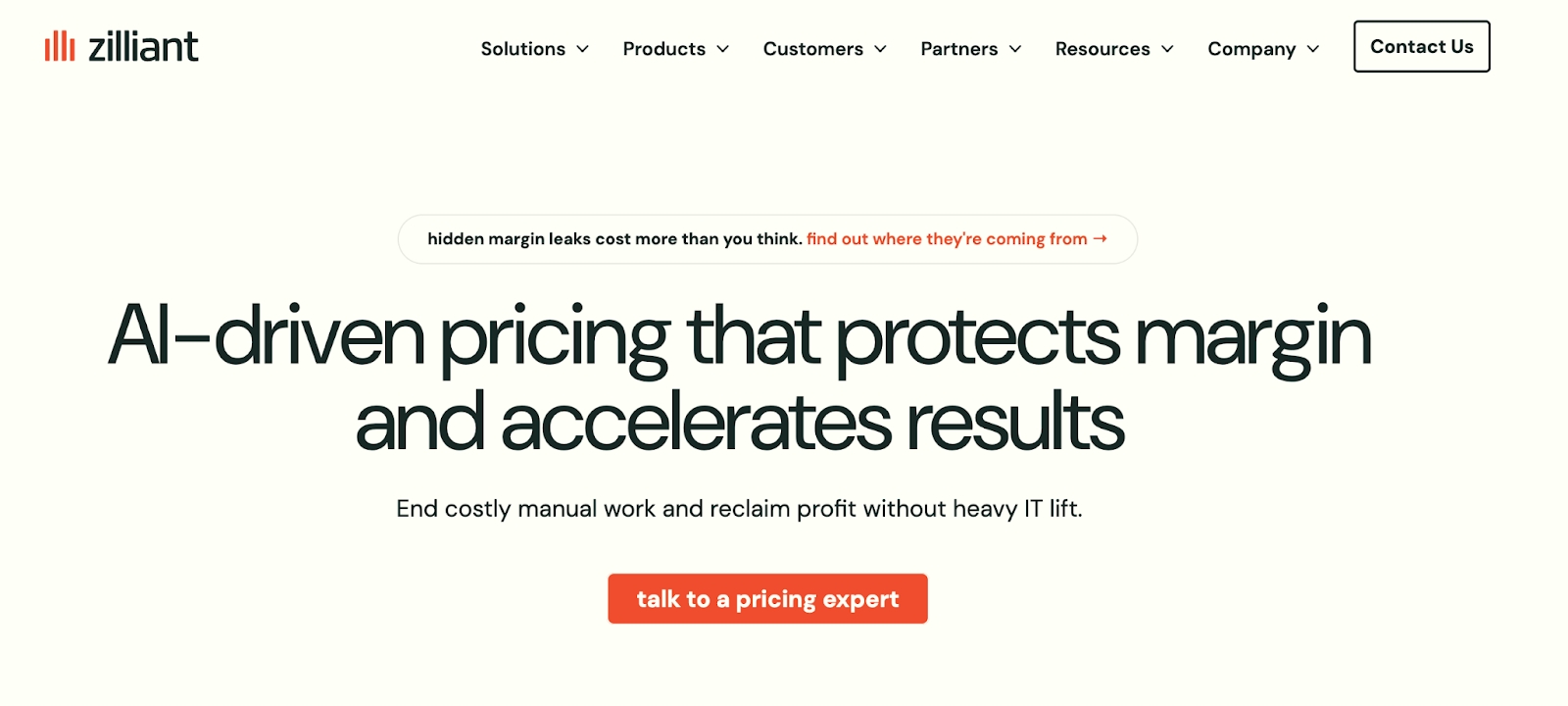
Zilliant- B2B pricing and sales optimization platform
Overview
B2B pricing and sales optimization platform with a strong focus on AI-driven segmentation and deal-level guidance.
Key Capabilities
- Price elasticity analysis and customer segmentation
- Dynamic pricing recommendations
- Deal scoring and win-loss analytics
- Revenue intelligence dashboards
Best For
Distributors and manufacturers prioritizing sales-led pricing optimization.
Strengths
- Delivers deal-level pricing recommendations that sales teams can use in live negotiations
- Provides granular customer and product segmentation that surfaces hidden pricing opportunities
- Aligns pricing analytics closely with sales workflows to drive adoption
- Demonstrates strong domain knowledge in complex B2B pricing environments
Limitations
- Initial implementation and data integration require significant time and internal resources
- Rebate and trade spend analytics are limited and typically handled in external systems
- User interface and analytics require training before teams see full value
- Pricing outcomes depend heavily on data quality and upstream system readiness
4. PROS
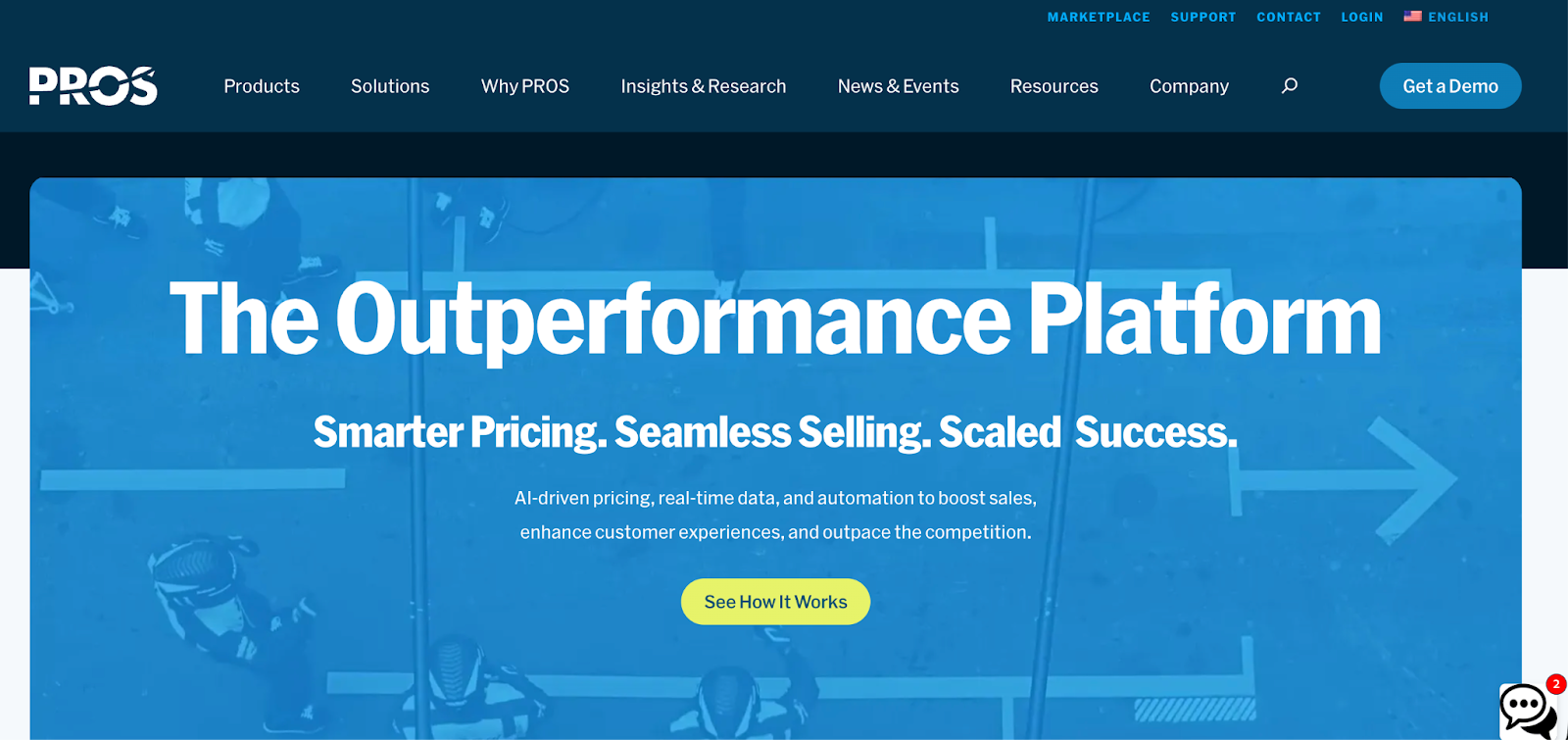
PROS- AI-powered pricing and revenue management platform
Overview
AI-powered pricing and revenue management platform with roots in travel and strong adoption in B2B pricing.
Key Capabilities
- Price optimization and demand forecasting
- Elasticity modeling
- Contract and agreement pricing management
- CPQ integration
Best For
Large enterprises with complex contract pricing and high transaction volumes.
Strengths
- Handles large SKU volumes and high transaction complexity without breaking pricing logic
- Applies advanced AI and pricing science to optimize prices in real time
- Becomes a centralized system of record for enterprise pricing decisions
- Streamlines pricing workflows once fully implemented
Limitations
- Implementation and configuration require significant time and specialist involvement
- Performance can slow down during large recalculations or data-heavy processes
- Rebate and trade spend management are not core platform capabilities
- Feature depth creates a learning curve that requires structured training
5. Vendavo

Vendavo- Enterprise pricing optimization platform
Overview
As an enterprise pricing and margin optimization platform, Vendavo is widely used in manufacturing and industrial distribution.
Key Capabilities
- Margin bridge analysis and price variance tracking
- Price segmentation and guidance
- Deal management and approval workflows
- Pricing performance dashboards
Best For
Large manufacturers require robust pricing governance and margin visibility.
Strengths
- Provides clear margin and price variance visibility that finance and pricing teams rely on
- Supports structured pricing governance with robust approval workflows and controls
- Handles complex B2B pricing structures common in industrial manufacturing
- Well-suited for organizations prioritizing pricing discipline over aggressive optimization
Limitations
- Implementation can be heavy and requires significant internal and partner involvement
- Less depth in rebate and trade spend analytics compared to specialized platforms
- The user interface is often described as functional rather than intuitive
- Pricing changes can feel slower to operationalize in highly dynamic markets
6. Syncron

Syncron- Pricing optimization platform
Overview
It’s a pricing optimization platform focused on aftermarket and spare parts pricing for manufacturers.
Key Capabilities
- Parts and service price optimization
- Competitive price positioning
- Elasticity-based recommendations
- Market-driven pricing analytics
Strengths
- Delivers strong pricing guidance for aftermarket and spare parts catalogs
- Supports competitive price positioning in service-heavy environments
- Handles long-tail SKUs and low-volume parts pricing effectively
- Well aligned to service and lifecycle revenue models
Limitations
- Primarily focused on aftermarket pricing rather than end-to-end portfolio analysis
- Limited coverage of rebates, promotions, and trade spend
- Less suitable for businesses where primary product pricing drives margin
- Integration breadth can be narrower outside service-centric use cases
7. Competera
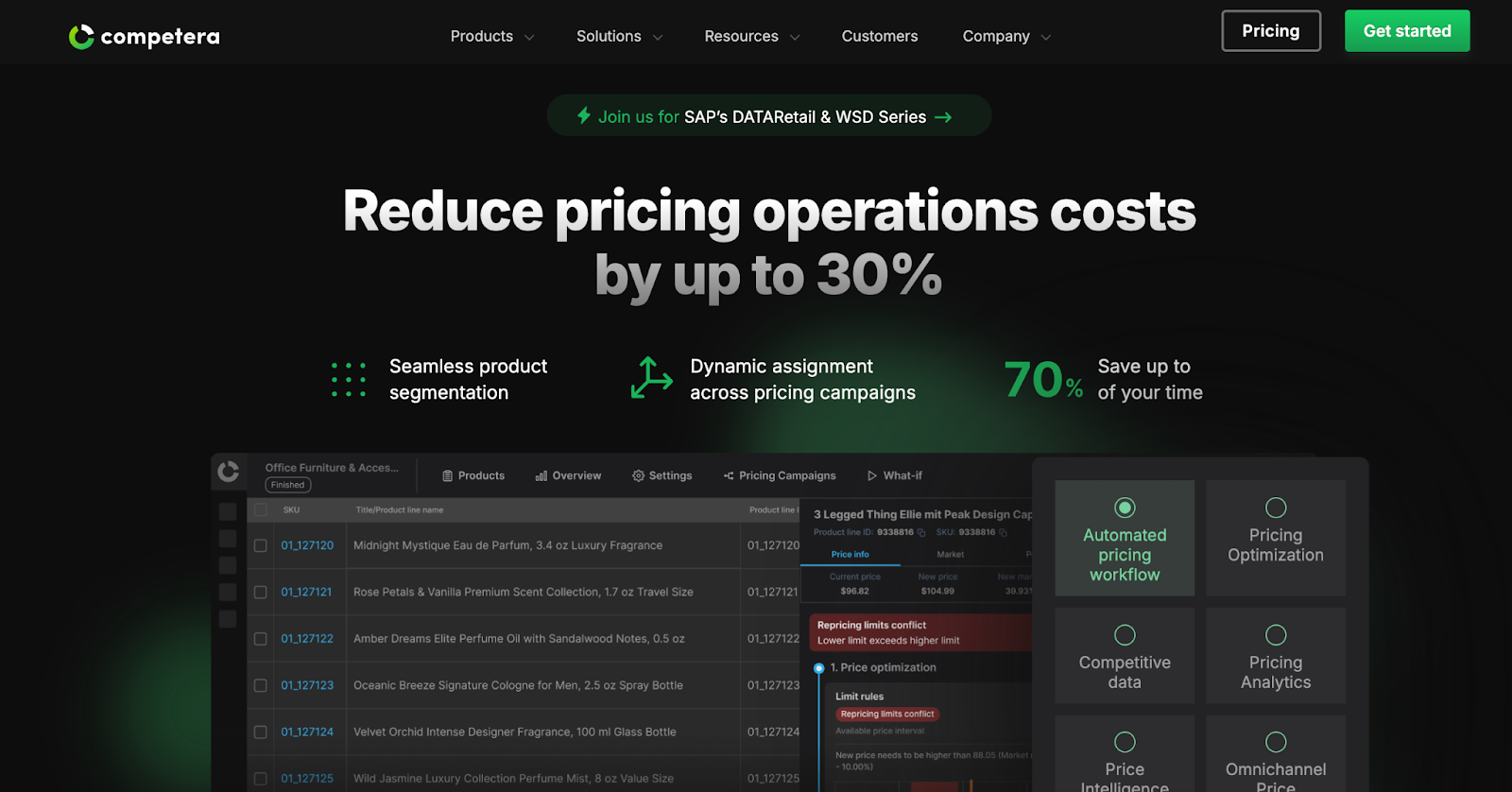
Competera- AI-driven pricing platform
Overview
This is another notable AI-driven pricing platform designed specifically for retail and e-commerce environments.
Key Capabilities
- Competitive price monitoring
- Demand-based price optimization
- Promotional pricing analytics
Strengths
- Optimizes prices effectively in highly competitive and promotion-heavy retail environments
- Handles dynamic assortments and frequent price changes at scale
- Provides strong competitive price monitoring and market responsiveness
- Well-suited for teams focused on short pricing cycles and rapid experimentation
Limitations
- Retail-first design limits applicability for B2B and manufacturing pricing models
- Limited support for rebates, contracts, and complex deal structures
- Less depth in margin analytics beyond retail-focused use cases
- Not designed for industries with regulated or multi-tier pricing requirements
Top tools: A comparison at a glance
| Tool | Best For | Pricing Analytics Depth | Scenario Planning | Rebate & Trade Spend | Execution & Guardrails | Industry Fit |
|---|---|---|---|---|---|---|
| Vistaar | Regulated, complex B2B and CG enterprises | Very High | Advanced, multi-variable | Native, end-to-end | Real-time, embedded | Beverage alcohol, CPG, pharma, manufacturing |
| Pricefx | Manufacturers and distributors | High | Strong | Limited, add-ons required | Moderate | Manufacturing, distribution |
| Zilliant | Sales-led B2B pricing | Medium–High | Moderate | Limited | Sales-centric | Distribution, industrial B2B |
| PROS | Large enterprises with contract pricing | High | Strong | Limited | Moderate | Travel, manufacturing, enterprise B2B |
| Vendavo | Governance-focused manufacturers | Medium | Basic–Moderate | Limited | Strong approvals | Industrial manufacturing |
| Syncron | Aftermarket pricing | Medium (aftermarket only) | Limited | Not supported | Moderate | Spare parts, service revenue |
| Competera | Retail and e-commerce | Medium | Retail-focused | Not supported | High-frequency retail pricing | Retail, e-commerce |
How Vistaar Enables End-to-End Pricing Impact Analysis
Most enterprise pricing teams don’t fail because they lack analytics. They fail because their pricing stack is fragmented.
Analytics live in one system. Rebates and trade spend sit in spreadsheets. Execution happens in ERP or CPQ. Scenario models look good on paper, but once prices hit the market, realized margins rarely match projections. Finance asks why. Pricing blames execution. Sales blames discounts.
The truth is simpler: no system connects insight to execution with full net-price visibility.
Vistaar was built to solve this exact problem.
Unlike generic pricing tools, Vistaar’s pricing solutions are purpose-built for regulated, rebate-intensive industries where pricing outcomes depend as much on off-invoice deductions, compliance rules, and multi-tier distribution as on list price.
For over 20 years, Vistaar has supported Fortune 500 enterprises managing over $1 trillion in annual revenues, with a platform designed to reflect how pricing actually works in the real world.
How is Vistaar Different?
Vistaar’s advantage is not just “unification.” It’s configurable integration across analytics, rebates, and execution, all governed by your business rules.
- Your business, your rules: Pricing logic, regulatory constraints, approval hierarchies, and channel rules are configured to match your operating reality, not forced into a generic template.
- True net price visibility: Rebate and trade spend are not add-ons. They are first-class inputs into every analysis, scenario, and recommendation.
- Execution without translation loss: Optimized prices flow directly into ERP, CRM, and CPQ systems with automated guardrails, so what you model is what gets executed.
- Predictable enterprise delivery: Fixed-cost implementation packages eliminate budget overruns and reduce deployment risk, a critical requirement for large, regulated organizations.
For example, a beverage alcohol producer faces a 6% raw material cost increase across multiple brands and states.
In a fragmented setup, prices are approved without full rebate, bill-back, or regulatory visibility, and realized margins fall short once deductions hit.
But with Vistaar, cost pass-through scenarios include rebates, elasticity, and state rules upfront, so finance sees true net margin before execution.
How Vistaar connects pricing needs to execution
| Pricing analysis need | Vistaar’s capabilities |
|---|---|
| Margin driver analysis | SmartOptimizer profitability dashboards with full net-price visibility |
| Price variance tracking | Real-time monitoring against target and policy prices |
| Scenario planning | What-if simulation across cost, price, demand, and rebates |
| Elasticity modeling | AI-driven price sensitivity analysis by segment |
| Prescriptive guidance | Optimized price recommendations by customer and channel |
| Rebate integration | SmartRebates with accruals, leakage detection, and true net price |
| Guardrails and governance | Automated approvals, alerts, and audit trails |
| Price execution | SmartPricingEngine delivery to ERP, CRM, and CPQ |
Rather than treating pricing analysis as a standalone exercise, Vistaar connects insight directly to execution. This closes the gap between analytical recommendations and real-world pricing outcomes.
Explore how Vistaar’s enterprise pricing platform helps B2B organizations analyze pricing impact, protect margins, and execute pricing decisions with measurable ROI.
To learn more, get a demo.
FAQs
What is pricing impact analysis?
Pricing impact analysis is the process of measuring how pricing decisions affect revenue, margin, and profitability across customers, products, channels, and regions.
It evaluates the combined impact of list prices, discounts, rebates, and cost changes to help pricing teams make data-driven decisions rather than relying on intuition or spreadsheets.
How does scenario planning improve pricing decisions?
Scenario planning allows pricing teams to model different market conditions before taking action.
By simulating cost increases, competitive price moves, demand shifts, or regulatory changes, teams can compare outcomes and understand margin risk in advance. This reduces reactive pricing and supports more confident, proactive decisions.
How do pricing analysis tools integrate with ERP and CRM systems?
Enterprise pricing tools typically integrate with ERP and CRM systems through APIs or pre-built connectors.
These integrations allow pricing teams to pull transaction, cost, and customer data for analysis, and then push approved prices, guardrails, and recommendations back into quoting, order management, and execution workflows.
What ROI can companies expect from pricing analytics software?
While results vary by industry and maturity, enterprises commonly see margin improvement through better price realization, reduced discount leakage, and more effective cost pass-through.
Because pricing gains flow directly to profit, even small improvements can deliver measurable ROI within the first pricing cycles when analytics are paired with execution.
