




- Cigarette volumes are declining, increasing price sensitivity and forcing retailers to rethink premium-led pricing models
- Smokeless tobacco, nicotine pouches, and e-cigarettes are growing rapidly, introducing new elasticity and substitution dynamics
- Regulatory complexity, including state taxes and minimum pricing laws, makes localized pricing essential
- Dynamic pricing and competitive intelligence help retailers respond faster to market and regulatory changes
- Data-driven, portfolio-level pricing is critical to protecting margins while adapting to shifting consumer preferences
The tobacco market trends reshaping retail today point to a category in transition. Cigarette volumes continue to decline across major markets, while smokeless tobacco, nicotine pouches, and e-cigarettes gain share, altering pricing, profitability, and store-level economics.
Globally, the nicotine pouch market is projected to exceed USD 25 billion, driven by rapid adoption and premium pricing dynamics. In the U.S., the e-cigarette category alone represents a market of nearly USD 9 billion, reflecting sustained consumer demand for alternatives.
In this article, we will examine the key market forces driving these shifts and explore how tobacco retailers can adapt pricing strategies to protect margins while remaining compliant and competitive.
1. Declining Cigarette Volumes and the Rise of Value Segments
Cigarette volumes continue to contract, reshaping how retailers think about pricing and profitability. In the U.S., total cigarette pack sales fell to approximately 6.9 billion packs, marking a decline of over 9 percent year over year, according to recent tobacco sales data. At the same time, adult smoking prevalence remains near historic lows, hovering at around 11 percent of the population, reinforcing a long-term structural decline rather than a temporary slowdown. These trends make it increasingly difficult for price increases alone to compensate for lost volume.
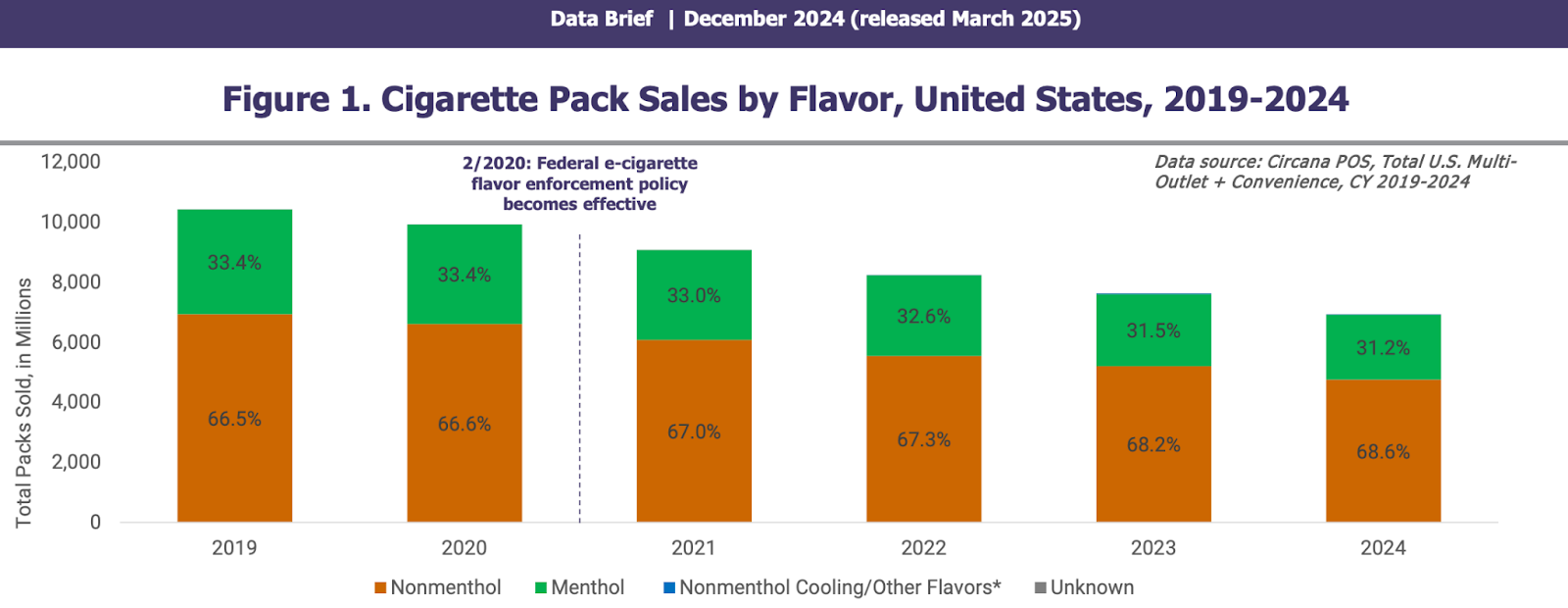
As demand weakens, cigarette pricing becomes more elastic. Remaining smokers are more price-sensitive, particularly in value-oriented markets, where even small price changes can influence brand choice, purchase frequency, or store loyalty. This has pushed retailers away from uniform, premium-led pricing strategies toward models that prioritize volume protection and category contribution.
Several forces are accelerating the shift toward value-focused cigarette pricing:
- Sustained declines in unit sales across traditional cigarette brands
- Higher consumer price sensitivity driven by economic pressure
- Faster growth in discount and deep-discount segments
- Increased dependence on promotions to preserve traffic and basket size
In response, pricing managers are adopting more granular, location-specific pricing strategies. Rather than maximizing margin per pack, the goal is to balance price and volume by structuring clear price tiers across premium, mid-tier, and value brands. In markets with higher elasticity, tighter price gaps and targeted discounting help retain price-conscious shoppers without eroding margins across the entire category.
Promotional strategy has become a critical lever in this environment. Manufacturer-funded buydowns, including discounts and temporary price reductions, are increasingly used to support value positioning. These programs vary by state, store location, and contractual terms and are now more frequently distributed through API-driven data integrations. This allows retailers to access updated program options faster and respond more dynamically to local market conditions.
However, greater program availability also increases complexity. An incorrect or suboptimal program election can reduce effective margins after billbacks, introduce compliance risk with minimum pricing laws, or create inconsistent pricing execution across stores. As a result, buydown selection is no longer a routine operational decision. It has become a strategic pricing choice that directly affects store-level performance and overall category profitability.
To navigate declining cigarette volumes successfully, pricing managers and category leaders must rely on elasticity modeling, price sensitivity analysis, and consumer segmentation at the local level. Treating cigarette pricing as a data-driven discipline, rather than a brand-driven one, allows retailers to stabilize category performance while reallocating margin and attention toward faster-growing nicotine segments.
2. Growth of Smokeless Tobacco and Alternative Nicotine Products
As cigarette volumes decline, smokeless tobacco, nicotine pouches, and vaping products are becoming central to tobacco retail growth. These categories are no longer niche or experimental. They now represent a meaningful and expanding share of category revenue, reshaping pricing decisions, shelf allocation, and margin strategy. Recent market estimates value the global nicotine pouch segment at over USD 5 billion, with rapid expansion driven by demand for smoke-free formats and modern nicotine delivery. The global e-cigarette and vaping market has grown into a USD 35+ billion category, reflecting sustained consumer adoption of non-combustible alternatives.
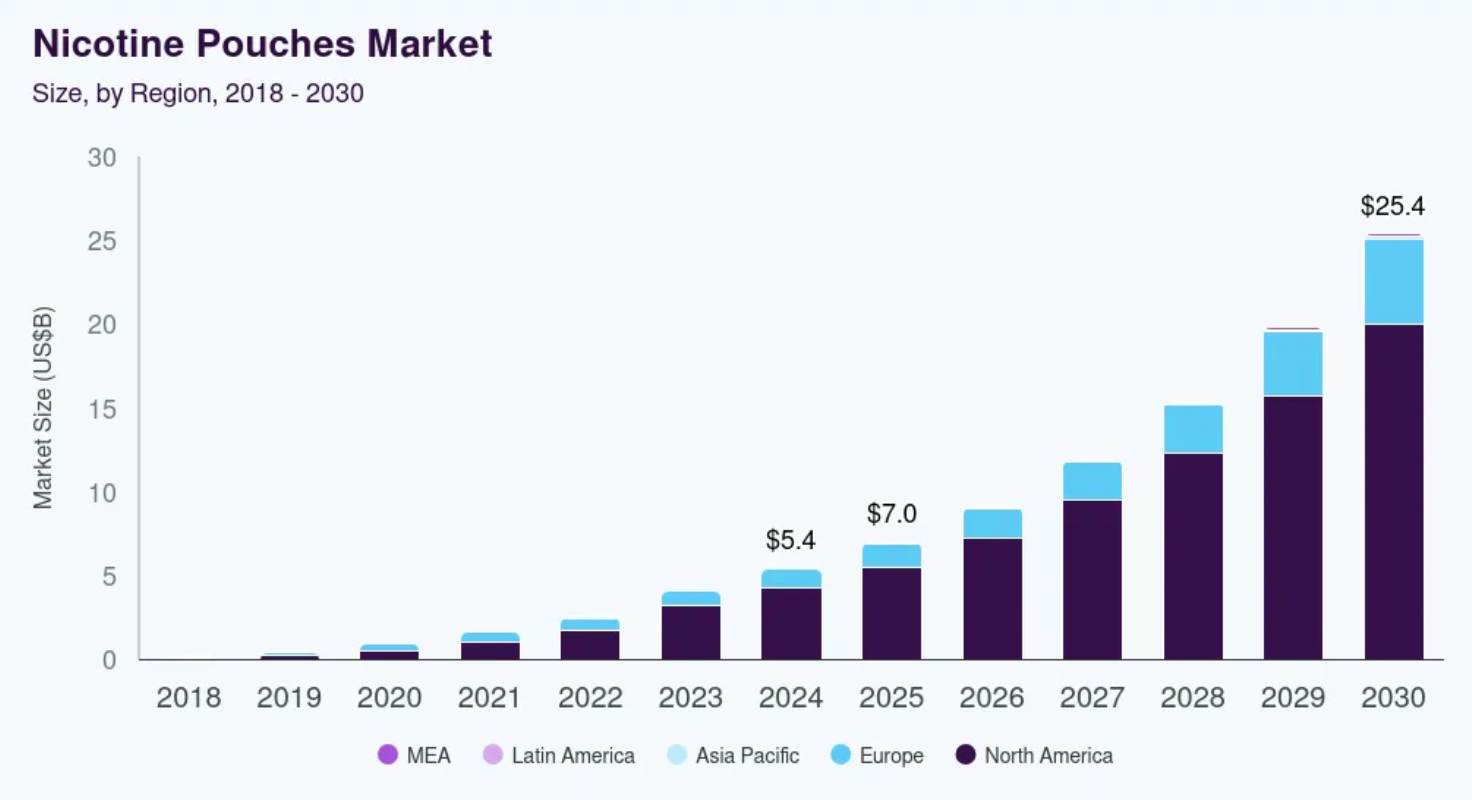
Unlike cigarettes, alternative nicotine products often support premium price points and exhibit different elasticity patterns. Nicotine pouches and modern oral products, in particular, tend to show lower short-term price sensitivity, giving retailers more flexibility in everyday pricing and promotional depth. However, demand varies significantly by consumer group and location. Younger adult consumers and health-conscious shoppers are more likely to adopt alternatives, while many existing tobacco users treat these products as complements rather than full substitutes. This makes consumer segmentation a critical input into pricing and assortment decisions.
Several structural factors are accelerating the growth of alternative nicotine products:
- Rising preference for smoke-free consumption formats
- Wider availability of nicotine strengths and product variants
- Increased trial and brand switching behavior
- Greater visibility and shelf presence at retail
As these products gain share, traditional cigarette-centric pricing models become less effective. Retailers must manage a diversified nicotine portfolio where each category responds differently to price changes. Substitution pricing models play a growing role, as price movements in cigarettes can directly influence demand for nicotine pouches, smokeless tobacco, or vaping products. In some markets, cigarette price increases accelerate migration to alternatives. In others, they reduce overall basket size if alternatives are not positioned correctly.
To manage this complexity, pricing managers increasingly rely on market basket analysis to understand cross-category relationships and avoid unintended margin erosion. Evaluating alternatives in isolation is no longer sufficient. Pricing decisions must account for total store contribution, cross-product substitution, and the combined impact on traffic and profitability.
As alternatives continue to expand, monitoring relative performance becomes essential. Retailers need visibility into how revenue mix, contribution margins, and promotional effectiveness are shifting across nicotine formats. These insights inform where premium pricing can be sustained and where value positioning remains necessary to protect volume.
Segmentation is central to executing these strategies effectively. Alternative nicotine products attract a broader and more diverse customer base than traditional cigarettes, requiring differentiated pricing approaches by market and store type. Premium nicotine pouch brands may support higher everyday pricing in urban or younger-skewing locations, while value-oriented smokeless products remain important in price-sensitive regions. Over time, lifetime value analysis helps justify these tailored strategies, as alternative product users often demonstrate higher repeat purchase rates and stronger brand loyalty.
As smokeless tobacco and alternative nicotine products continue to grow, pricing leaders must treat them as core strategic categories rather than secondary add-ons. Retailers that integrate portfolio optimization, substitution pricing, and consumer behavior insights into their pricing frameworks are better positioned to capture growth while maintaining margin discipline and execution control.
3. Regulatory Pressures and Their Impact on Retail Strategies
Regulation is one of the most powerful forces shaping tobacco pricing, and it has become more complex as product portfolios expand. Retailers must navigate a layered regulatory environment that includes federal oversight, state excise taxes, minimum pricing laws, and local restrictions on promotion and advertising. In the U.S., oversight from the Food and Drug Administration extends beyond cigarettes to smokeless tobacco, nicotine pouches, and e-cigarettes, increasing compliance requirements across the entire category.
Taxation remains a primary driver of price volatility. State and local excise taxes continue to account for a significant share of the retail price of cigarettes, and tax structures often differ sharply by jurisdiction. Recent public health and tax data show that cigarette prices vary widely across states, largely due to differences in excise tax rates and minimum price regulations. For pricing managers, this means a single national pricing strategy is rarely viable. Price floors, tax pass-through rules, and margin thresholds must be managed at a state or even local level.
Several regulatory factors directly complicate pricing execution:
- State-level excise taxes that vary by product type and nicotine format
- Minimum pricing laws that restrict discounting and promotional depth
- Advertising and display limitations that reduce traditional promotional levers
- Product authorization requirements that affect assortment and availability
These constraints increase compliance risk when pricing is managed manually or inconsistently. A price that is compliant in one state may violate minimum price laws in another. Similarly, a promotion supported by a manufacturer program may still result in non-compliant shelf pricing if taxes, fees, or buydowns are misapplied.
As alternative nicotine products gain share, regulatory complexity increases further. Many states tax smokeless tobacco, nicotine pouches, and e-cigarettes differently than cigarettes, often using weight-based, unit-based, or percentage-of-price models. Pricing managers must account for these differences when evaluating margins, designing price tiers, or selecting promotional programs. Failure to do so can distort true profitability and expose retailers to audit risk or penalties.
This environment places greater emphasis on agile pricing strategies. Retailers need the ability to respond quickly to regulatory changes, tax updates, and enforcement actions without disrupting store operations or compromising margins. Cost-benefit analysis becomes essential, as pricing decisions must balance compliance, competitiveness, and contribution margin at the same time.
For pricing and finance leaders, regulatory pressure is no longer a background constraint. It is a central variable in pricing strategy. Retailers that proactively embed regulatory considerations into pricing governance, approval workflows, and performance measurement are better equipped to operate at scale, reduce risk, and maintain pricing consistency across markets.
Now let’s examine how dynamic pricing and competitive intelligence are shaping market success.
4. How Dynamic Pricing and Competitive Intelligence Are Shaping Market Success
As tobacco retail becomes more fragmented and regulated, static pricing models are increasingly ineffective. Declining cigarette volumes, expanding alternative categories, and jurisdiction-level regulations require pricing decisions that are faster, more precise, and locally informed. This has elevated the role of dynamic pricing and competitive intelligence as core capabilities for pricing managers and revenue operations teams.
Dynamic pricing allows retailers to adjust prices in response to real-time inputs such as tax changes, competitive movements, promotional availability, and demand shifts. Instead of relying on periodic price updates, pricing leaders can continuously recalibrate price points to protect margins while remaining competitive. This is especially critical in tobacco, where price sensitivity varies sharply by location, product type, and consumer segment.
Competitive intelligence plays a complementary role. Monitoring competitor prices, promotions, and assortment changes helps retailers avoid blind spots that can erode market share. In highly competitive markets, even small price discrepancies can influence store choice, particularly for price-sensitive cigarette shoppers. When combined with elasticity modeling, competitive benchmarks help pricing teams understand where price leadership matters and where margin can be preserved without volume loss.
A key challenge in this environment is program election at the store level. Promotional programs and buydowns often vary by geography, contract terms, and supplier participation. Selecting the wrong program for a given location can reduce effective margins, weaken promotional impact, or misalign pricing with local demand. Conversely, well-aligned program selection can materially improve store performance and category contribution.
Several advanced pricing capabilities are becoming essential:
- Real-time pricing optimization based on market and regulatory inputs
- Geo-pricing to reflect local demand patterns and competitive intensity
- Competitive price tracking to identify gaps and opportunities
- Contribution margin analysis to measure true profitability after promotions
These tools enable pricing managers to move beyond reactive adjustments and toward proactive decision-making. Rather than responding after volume or margin declines appear in reports, teams can anticipate risk and act earlier.
Ultimately, success in modern tobacco retail pricing depends on speed and accuracy. Retailers that integrate dynamic pricing with competitive intelligence are better positioned to manage complexity, adapt to market shifts, and make informed trade-offs between price, volume, and profitability at the store level.
Next, we’ll explore how shifting consumer preferences toward health-conscious choices are influencing pricing strategy, and what this means for long-term category planning.
5. Shifting Consumer Preferences Toward Health-Conscious Choices
Consumer preferences across the tobacco category are evolving, with a growing segment of shoppers seeking products they perceive as less harmful or more socially acceptable than traditional cigarettes. Nicotine pouches, e-cigarettes, and other smoke-free alternatives are increasingly positioned around discretion, convenience, and reduced exposure, influencing both trial and repeat purchase behavior. For retailers, this shift introduces new pricing and assortment considerations that extend beyond short-term volume replacement.
Health-conscious preferences tend to correlate with different purchasing patterns. These consumers are often less price-driven than legacy cigarette buyers and more responsive to product attributes such as nicotine strength, format, and brand positioning. As a result, segmented pricing models become more effective than broad, category-wide price moves. Retailers that differentiate pricing based on consumer intent and usage occasion are better able to capture value without suppressing demand.
This shift also increases the importance of lifetime value analysis in pricing decisions. Shoppers who adopt alternative nicotine products often demonstrate higher repeat purchase rates and longer retention, particularly when products are positioned as part of a transition away from cigarettes. Pricing strategies that account for long-term customer value, rather than immediate unit margins, allow retailers to justify premium pricing where loyalty and repeat behavior are strong.
Predictive analytics plays a growing role in supporting these strategies. By analyzing purchase history, product switching behavior, and basket composition, pricing teams can anticipate demand shifts and tailor pricing accordingly. This helps retailers align pricing with emerging preferences while avoiding overreliance on discounting to drive trial.
As health-conscious choices gain traction, pricing leaders must balance innovation with discipline. The opportunity lies in using consumer behavior insights to design pricing strategies that reflect evolving demand, protect margins, and support sustainable growth across a changing nicotine portfolio.
Ready to Optimize Your Tobacco Pricing Strategy?
The tobacco retail landscape is becoming more complex, not less. Declining cigarette volumes, rapid growth in alternative products, and increasing regulatory pressure require pricing strategies that are data-driven, agile, and locally informed.
To remain competitive, pricing managers need the ability to evaluate price performance in real time, select the right promotional programs by location, and ensure compliance across jurisdictions without slowing execution. Centralized pricing governance, advanced analytics, and automation play a critical role in enabling this shift.
Solutions like Vistaar’s Smart Pricing platform help pricing teams industrialize pricing processes, respond faster to market and regulatory changes, and maintain margin discipline across an increasingly diverse product mix. By combining dynamic pricing, program optimization, and compliance controls, retailers can turn pricing complexity into a strategic advantage.
FAQs-
What are the key tobacco market trends shaping the industry today?
Tobacco retail is being shaped by declining cigarette volumes, rapid growth in smokeless and alternative nicotine products, rising regulatory complexity, and increased price sensitivity. These trends are pushing retailers to move away from static pricing and toward localized, data-driven strategies that balance compliance, volume retention, and margin protection.
How can tobacco retailers adjust pricing strategies as cigarette volumes decline?
Retailers need to shift from premium-led pricing to value- and volume-focused approaches. This includes tighter price tiers, elasticity-based pricing by location, and selective use of manufacturer-funded promotions. The objective is to protect total category contribution rather than relying on higher margins per pack.
What is the impact of smokeless tobacco and e-cigarettes on pricing models?
Smokeless tobacco and e-cigarettes introduce different demand and elasticity profiles, often supporting premium pricing. Their growth requires portfolio-based pricing models that account for substitution effects, cross-category demand, and total basket contribution rather than treating each category in isolation.
How can tobacco retailers stay compliant while optimizing pricing?
Retailers must manage state-specific tax structures, minimum pricing laws, and promotional restrictions at a granular level. Centralized pricing governance, consistent rule enforcement, and clear audit trails help reduce compliance risk while enabling faster, compliant pricing adjustments across markets.
What is dynamic pricing, and how does it help tobacco retailers maintain profitability?
Dynamic pricing uses real-time data to adjust prices based on demand, competition, taxes, and promotions. In tobacco retail, it enables faster responses to market and regulatory changes, improves margin control, and supports location-specific pricing decisions that balance competitiveness and profitability.
