
TL;DR

  • Channel rebates are performance-based incentives to maintain competitive positioning across complex partner networks
  • You’re managing volume tiers, market share thresholds, and loyalty programs that require precise calculation across multiple currencies, tax jurisdictions, and regional pricing structures
  • Manual tracking creates revenue leakage through calculation errors, missed compliance deadlines, and insufficient visibility into program ROI
  • Automated rebate platforms address these challenges through real-time accrual calculations, integrated compliance management, and predictive analytics
  • SmartRebates addresses these challenges through accrual calculations, integrated compliance management, and predictive analytics that forecast program effectiveness before you commit budget

Rebate programs that span 50+ distribution partners are complex by nature. They often have different volume commitments, regional pricing structures, and performance thresholds for each relationship.

For instance, a distributor in Germany qualifies for an 8% volume rebate based on annual purchases. On the other hand, Southeast Asia partners operate under quarterly volume escalations tied to product mix requirements.

Each program demands a precise tracking of purchase volumes and market share data, as well as compliance with local tax treatment of rebates.

And as you scale, this complexity extends beyond the mechanics of calculation.

In this context, rebates become profit levers when automated, integrated systems calculate in real time, maintain accurate tax and revenue recognition, and provide complete ROI visibility by program, partner, and product.

In this article, we explore:

  • How modern channel rebate programs work in practice
  • Why manual tracking fails at scale
  • How AI-enabled, and ERP/CRM-integrated platforms like Vistaar SmartRebates help you design, calculate, and optimize rebates as a true profit lever

What are Channel Rebates?

Channel rebates are incentives you offer distributors after they meet specific performance targets, rather than upfront invoice discounts.

There are mainly three types of channel rebates:

  • Volume rebates that reward higher purchase thresholds
  • Market share rebates that pay for prioritizing your products over competitors
  • Loyalty rebates that reward long-term, committed relationships

Each type affects pricing waterfalls differently. For example, volume rebates reduce net price as tiers increase. Market share bonuses function as separate performance payouts. Additionally, loyalty rebates are typically annual or term-based payments layered on top of list price, discounts, freight, and promotions.

Let’s take a closer look at these three in the next section so that you can decide better

3 types of channel rebates

Pie chart showing three rebate types: volume-based, loyalty, and market-share-based rebates.

Volume-based rebates

Volume-based rebates pay partners when their purchases hit predefined volume tiers over a period. Partners earn higher rebate percentages as they move up the tiers, which pushes them to increase their order sizes. In some cases, they can pull forward demand to reach the next threshold (i.e., using pricing as the most powerful lever).

Volume-based rebates tie directly to purchase quantities within a set time window. They use tiered structures where increased volume unlocks higher rebate percentages. Programs are typically structured by product category, with different thresholds and rates reflecting margin profiles and competitive dynamics.

Example:

Suppose a regional distributor purchases $950,000 in inventory annually and currently qualifies for a 2% rebate worth $19,000. If your program offers a 5% retroactive rebate starting at $1 million, the partner has a financial incentive to increase their order size.

By spending just $50,000 more to cross that threshold, their total rebate payment jumps to $50,000 because the new rate applies to every dollar spent. This subsidizes the additional inventory cost and compels the partner to consolidate their budget with you.

2. Market-share-based rebates

Market-share-based rebates reward partners for reaching specific share targets in their territory or customer base. When they reach a defined market share percentage, they unlock additional rebates in addition to any volume benefits.

In essence, these rebates are based on penetration rather than absolute volume, requiring reliable market data, including total category size in the territory and competitor versus own-brand sales through each partner.

Organizations use these programs to push partners toward prioritizing specific SKUs over competing lines and winning better shelf space and seller attention.

Simply put, with market-share-based rebates, you are effectively paying for focus and product preference.

Example:

You might offer a distributor a standard rebate for hitting $1 million in sales while reserving a separate bonus for when your brand represents 40% of their total category turnover.

This structure prevents you from rewarding a partner who increases your sales, even if it also boosts a competitor’s sales even faster. It aligns their profitability directly with your market dominance.

3. Loyalty rebates

Loyalty rebates compensate partners for long-term commitment and preferred or exclusive relationships. They usually pay out on an annual cycle and depend on sustained volume and contract terms.

These rebates are structured around relationship length, multi-year purchase commitments, and exclusive or preferred supplier agreements. They aim to reduce churn by increasing switching costs after partners have invested in training, systems, and customer relationships around specific products.

Also, loyalty rebates layer on top of volume and market-share rebates, requiring careful control of total rebate spend to maintain overall economics.

Example:

Consider a specialized distributor who signs a three-year exclusivity agreement to carry your brand as their primary supplier. You might offer an additional 2% loyalty bonus that accumulates annually but only pays out if they maintain that exclusive status for the full twelve months.

If they introduce a competing product line mid-year, they forfeit this entire accrued bonus. This creates a high financial barrier to entry for your competitors and secures long-term revenue stability.

Role of Channel Rebates in Pricing Systems

Rebates sit inside your pricing system and directly shape what you actually earn on each sale. When you automate instant rebate calculations and accruals, you get accurate profitability, clear visibility into program costs, and reduced busywork even in complex, multi-tier, and multi-currency setups.

Rebate calculation automation

You need rebate systems that calculate accruals in real time as orders flow through order management and invoicing, updating tiers and liabilities the moment a partner crosses a threshold.

That system should handle:

  • Tier logic, retroactive adjustments, and proration when partners join mid-period
  • Tax rules by region, including when rebates are price adjustments versus separate payments, with full audit trails
  • Multi-currency tracking, correct FX at transaction and payment dates, and exposure between accrual and payout

In this process, AI adds another layer by:

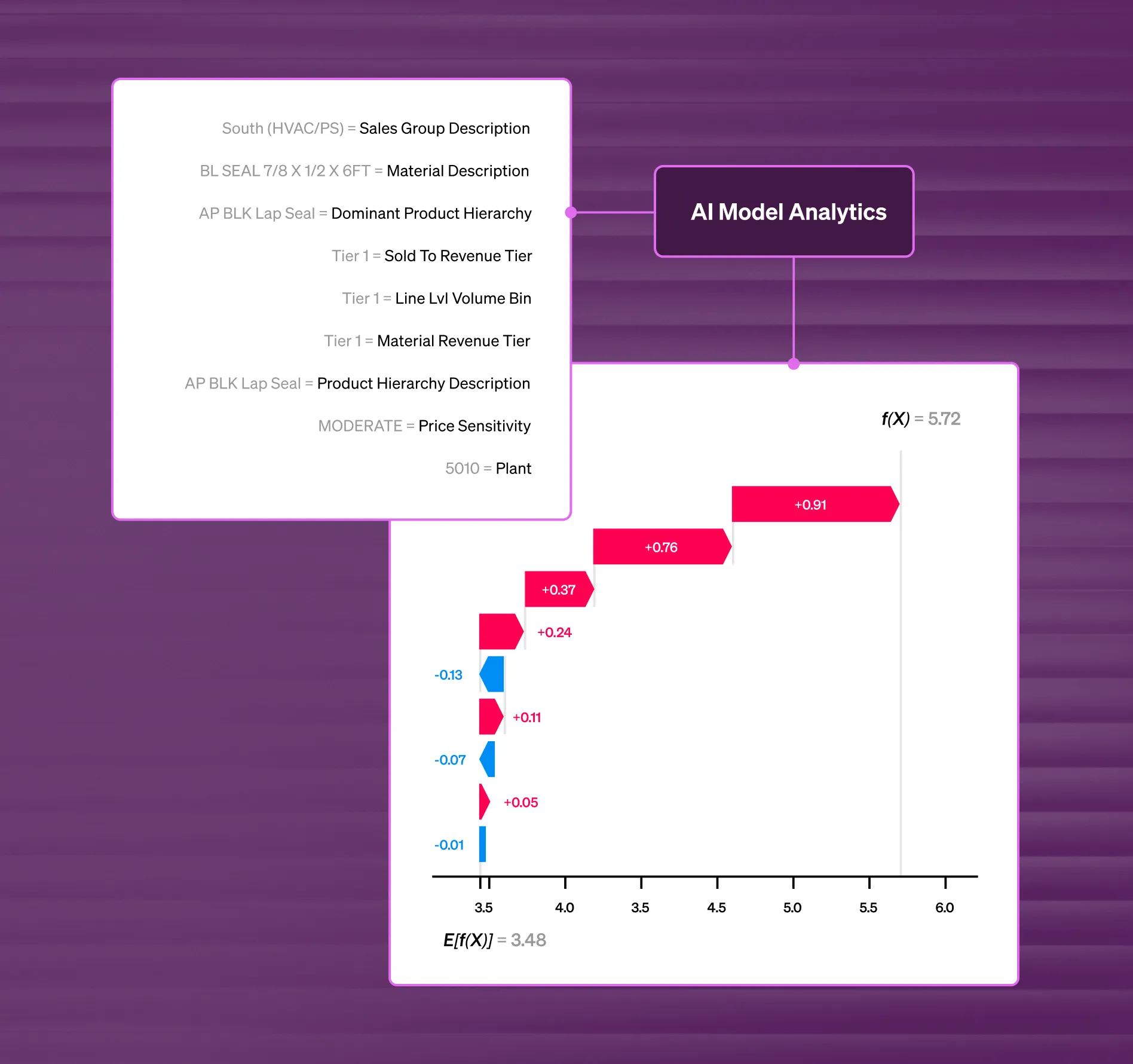
  • Predicting whether partners will reach the next tier based on history, seasonality, and current run-rate
  • Recommending changes to thresholds, rates, and timing, then projecting the impact on volume, cost, and margin before you update programs

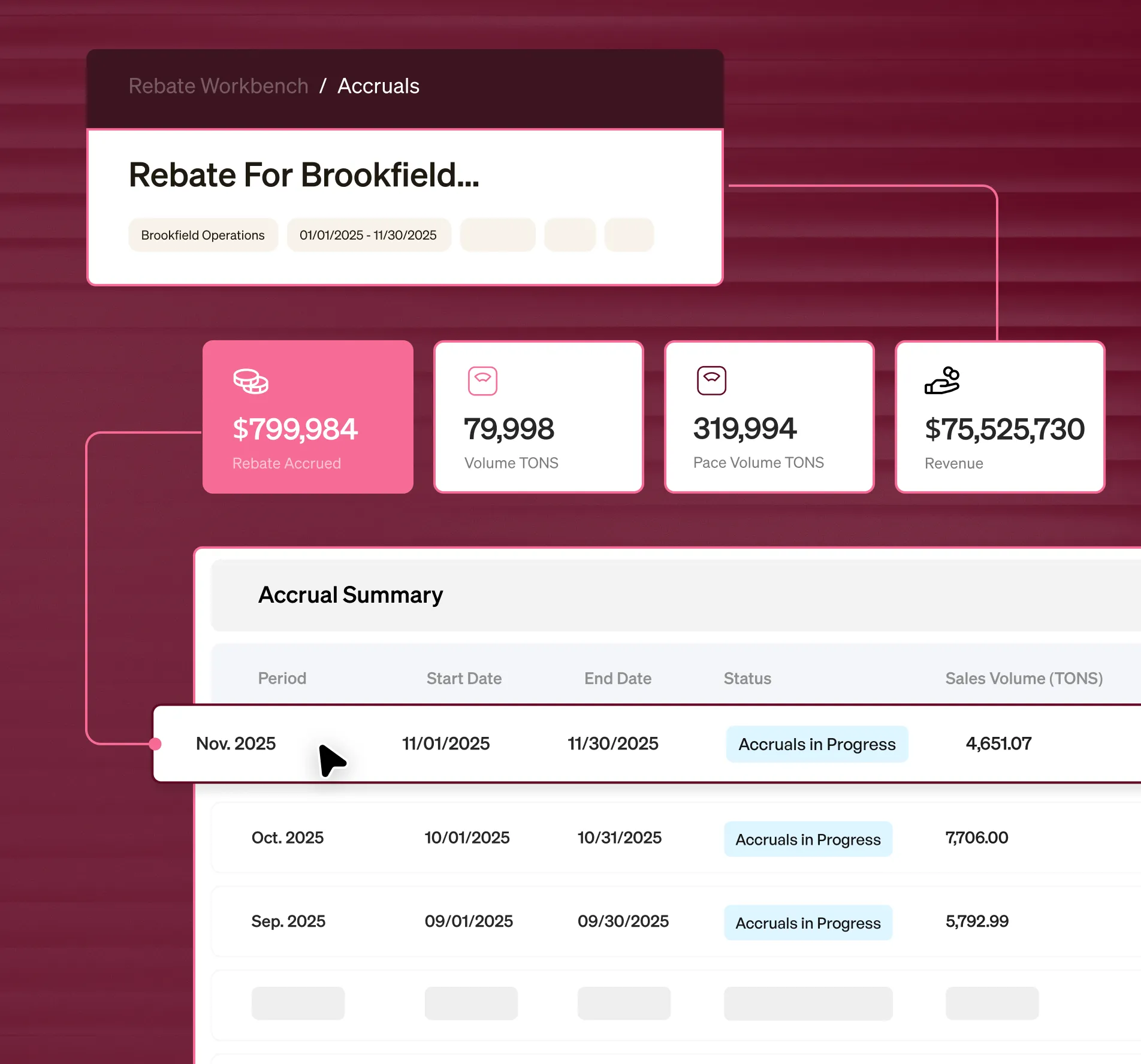
For instance, Vistaar’s rebate management software SmartRebates automates these calculations and workflows, replacing spreadsheets with a rules-based engine that manages complex tiers, currencies, and tax treatments.

At the same time, everything remains perfectly auditable and in your control.

Plus, it integrates with ERP and CRM systems so transaction data, accruals, and rebate positions sync automatically into pricing models and financial reporting. This means you get a unified view of rebate costs, performance, and margin impact across the price waterfall.

3 Key Benefits of Channel Rebates for Pricing Optimization

Now, what are the major advantages of channel rebates when you are optimizing pricing? Yes, rebates create the most value when you manage them precisely and connect them to your overall pricing strategy. Done well, they protect margins, improve efficiency, and keep you compliant with complex tax rules.

Here’s how:

Protect profit margins

Rebates directly reduce net realized prices and compress margins. As a case in point, a product with a 40% gross margin can fall to 28% once volume rebates, market-share incentives, and loyalty payments are applied.

The objective is controlling margin leakage while using incentives to drive volume and partner behavior.

Prevent discount stacking

Effective rebate management starts with stoppin gunintended discount stacking. When sales negotiates a 10% off-invoice discount, the system must immediately surface whether the customer also qualifies for volume or loyalty rebates.

This transparency allows pricing teams to evaluate whether combined discounts breach margin thresholds and to enforce clear stacking rules before deals are finalized.

Measure incrementality

Performance visibility is also equally critical. Paying an 8% volume rebate above a $5M threshold only makes sense if it drives incremental volume, not if it rewards purchases that would have happened anyway.

By comparing partner volume growth against rebate tiers, teams can distinguish incentives that change behaviour from those that simply dilute margin.

Analyze rebate ROI

Next comes cumulative profitability rather than total rebate spend. Partners whose volumes increase meaningfully after the introduction of a rebate demonstrate ROI.

On the other hand, partners with flat volumes despite high rebate payouts represent pure margin leakage.

These insights inform program redesign: concentrating spending where incentives actually move demand

Track GMROI

Apart from these three aspects, Gross Margin Return on Investment (GMROI) also provides a clear decision metric. By comparing gross margin dollars generated against total rebate costs, teams can quantify effectiveness.

For instance, a program generating $800K in gross margin at a $500K rebate cost delivers a GMROI of 1.6 and justifies continuation. Programs with GMROI below 1.0 destroy value and should be restructured or retired.

Operational efficiency

Manual rebate tracking wastes significant time across finance, sales, and operations. Analysts spend hours quarterly collecting data from multiple systems, calculating tiers in spreadsheets, fixing errors, and reconciling statements. Payments involve separate approval and transfer processes.

Automation removes these bottlenecks:

  • Transaction data flows directly from ERP to the rebate system
  • Instant calculations and continuous accrual updates
  • Automatic payment workflows with approvals and documentation

As a result, teams shift to program optimization, partner analysis, and strategic pricing. And the stakes are high: with just a 1% error rate in a spreadsheet, companies could lose as much as £8 billion in rebates in a single year.

What are the other advantages of automation?

Here are some of the additional benefits that automation via a tool like SmartRebates offers:

  • Distributed teams access live rebate data for better negotiations
  • Finance retains control over rules and approvals
  • Partners see real-time balances via the portal, which leads to fewer status inquiries
  • Sales can immediately act when partners near next tier thresholds, driving incremental purchases

Tax compliance and flexibility

Global operations require managing rebates across jurisdictions with different tax treatment. For instance:

  • In Europe, VAT often treats rebates as price adjustments. It requires credit notes to reduce the original invoice’s VAT basis
  • In the US, sales tax varies by state: some require recalculation of rebated amounts; others exclude rebates from the tax base

Therefore, your system must automatically apply correct tax treatment based on partner location and transaction details. It must also accomplish the following:

Managing multi-currency exposure

Multi-currency management extends beyond simple conversion. When you accrue rebates in euros from purchases made in British pounds, the system must track both the original pound-denominated transactions and the euro-based rebate liabilities.

It has to manage currency exposure between the accrual and payment dates.

Standardizing regional governance

Also, contract terms need to flex by region and product while still staying under central control. Your platform should support different payment frequencies and tier structures while enforcing standard approvals and financial controls.

Ensuring audit readiness

For audits, you need complete, system-generated trails that show every transaction, tier change, accrual update, tax decision, and payment. This way, tax authorities and auditors can easily verify how each rebate was calculated and booked.

Common Challenges in Managing Channel Rebates

Managing channel rebates at enterprise scale creates interconnected operational, financial, and strategic challenges, such as:

Rebate program complexity

As noted before, programs involve intricate tier structures that vary by product category (different volume tiers for fasteners vs. adhesives), partner size (national vs. regional distributors), and region.

For instance, European programs adapt to competitive dynamics, while Asian ones emphasize market-share incentives, and Latin American ones prioritize payment terms and currency risks.

Therefore, calculations become complex with cumulative vs. incremental tiers, overlapping rebate types (volume, market share, loyalty), and exclusion rules. Poorly designed thresholds or rates fail to motivate partners or drive desired behavior.

Manual rebate tracking and errors

Manual approach via spreadsheet-based processes is prone to data entry mistakes, formula errors, version control issues, and reconciliation delays. These cause revenue leakage through overpayments. This is highly significant as some cases show up to 10% overpayments in large programs or underpayments that damage relationships.

Delayed payouts frustrate partners and risk lost business. Lagging accruals distort financial statements (e.g., understating liabilities by 15-20%). Compliance is hampered by incomplete documentation, compounding audit and tax risks.

Lack of data visibility

Without integrated tracking, organizations struggle to measure program ROI granularly, knowing total rebate costs (As Forrester Insights notes, often 10-50% of sales in channel programs), but not which segments or categories deliver value.

This hinders optimization, resource allocation, and KPI tracking (e.g., rebate ROI, margin impact). Clearly, manual systems can’t provide current insights, partner-specific views, or centralized dashboards for sales, finance, and partners.

Opportunities like guiding partners nearing tiers are missed, and data visualization (heat maps, trends, cohorts) remains unavailable.

These challenges accumulate over time: inadvertent errors erode margins, complexity obscures performance, and poor oversight prevents proactive management.

Industry sources highlight that outdated processes create administrative burdens, inaccuracies, and limited insights, while automation addresses these issues to improve efficiency and ROI.

But how do you choose the most suitable solution? Let’s explore.

Modern Solutions for Optimizing Channel Rebates

Flow diagram showing inefficient manual rebate management transitioning to Vistaar SmartRebates implementation

Addressing rebate management challenges requires automated, all-in-oneplatforms that deliver AI-driven analytics and ERP/CRM integration to enhance accuracy, oversight, and profitability.

Here are the crucial features of a perfect rebate management solution:

End-to-end automation

The solution automates the flow of transaction data from ERP systems into the rebate platform as orders and invoices are processed. Rules engines handle complex tier structures, retroactive adjustments, proration, and real-time accrual updates, recalculating liabilities instantly.

Accruals also stay accurate for revenue recognition and quarterly closes. Payments trigger automatically at period end: generating files, routing approvals, and producing remittance details with full transaction transparency. This works like a charm to resolve disputes.

When it comes to compliance, it is built in. Automatic VAT credit notes for Europe (with invoice linking), 1099 forms for US thresholds, and complete audit trails across jurisdictions.

Plus, automation dramatically reduces manual effort, often improving process efficiency by ~30% and significantly cutting calculation time.

AI-powered optimization

Machine learning analyzes historical data to segment partners by rebate response. This can identify those who drive volume from incentives againstthose who don’t. It goes a long way to support a targeted, high-ROI program design.

Predictive analytics forecast liabilities months in advance using current trends, seasonality, and tier progression, providing early warnings of budget overruns.

Moreover, AI incorporates external signals (market trends, competitive pricing, demand forecasts) to recommend rate adjustments, category focus, or geographic customization. For example, boosting rebates during demand upticks or matching rivals were profitable.

Directdata integration

API connections with ERP (SAP, Oracle, Dynamics, etc.) and CRM (Salesforce) enable bidirectional flow:

  • Transactions to rebate calculations
  • Accruals back to financials
  • Real-time visibility in sales tools for tier progress and projections

This stopsmanual data movement, ensures closed-loop accuracy, and supports modern cloud stacks. Sales teams see accrual balances during negotiations; finance gets automated reporting with partner breakdowns for audits.

To note, platforms like Vistaar SmartRebates industrialize these processes at scale: automating multi-tier calculations, currency handling, tax compliance, and payouts while leveraging AI for insights and optimization, all with strong ERP/CRM integration.

As a result, you get reduced errors and administrative burden, better program ROI, proactive decision-making, stronger partner relationships, and measurable gains in profitability.

Best Practices for Managing Channel Rebates Efficiently

Successful rebate programs demand disciplined design, continuous monitoring, and ongoing optimization to align with strategic goals. Clear, transparent terms build partner trust and enable accurate execution. At the same time, robust tracking reveals true effectiveness, and data-driven adjustments keep programs agile amid changing markets.

Clear rebate terms

  • Document tier structures, qualifying criteria, calculations, payment schedules, and dispute processes in signed contracts to eliminate ambiguity and ensure enforceability
  • Provide accessible, version-controlled materials for sales (discussion tools), finance (accrual methodologies), and partners (qualification guides)
  • Use standard templates with controlled flexibility for strategic exceptions, and set achievable, transparent thresholds so partners can self-track progress, developing motivation and trust
  • Include performance clauses (e.g., market share, loyalty) with verifiable measurement methods

Continuous monitoring & optimization

  • Track key metrics such as rebate costs as a percentage of revenue, incremental volume growth, and program ROI, using industry benchmarks that show effective programs deliver strong returns while controlling costs (revenue leakages cost account for nearly 2–7% of loss)
  • Analyze performance by product category, partner segment, and region to direct resources toward high-ROI programs and relationships
  • Use role-specific KPI dashboards for pricing teams (aggregate rebate costs and ROI), sales teams (partner tier progress and opportunities), and finance teams (accrual accuracy and compliance status)

Use AI

  • Leverage AI to generate recommendations, such as adjusting thresholds in underperforming regions or reallocating spend from low-value loyalty incentives to volume-based rebates, and to systematically identify leakage from non-incremental payouts
  • Monitor margin erosion early and trigger program restructures when rebate costs compress profitability beyond acceptable levels

How Vistaar Optimizes Channel Rebate Management

A wheel diagram for SmartRebates showing its six core capabilities

Vistaar SmartRebates delivers comprehensive, automated rebate management as part of the integrated Price-Quote-Rebate suite. Its key capabilities are as follows:

  • Program design & automation: Easily configure complex, multi-tier rebate structures (by partner, product, region, time) with intuitive tools; automatically applies rules across thousands of transactions with full audit trails
  • ERP integration: Bi-directional sync with SAP, Oracle, Microsoft Dynamics, and others for automatic transaction ingestion and accrual posting
  • Financial & compliance reporting: Generates detailed accrual, expense, payment, and tax documentation; supports SOX compliance and external audits
  • Strategic integration advantages: Provides end-to-end oversight across pricing, quoting, and rebates; prevents margin erosion from overlapping discounts/rebates; enables proactive use of rebate projections in negotiations via SmartQuote
  • Granular analytics & dashboards: Executive summaries of costs, ROI, and margin impact; granular views for regional, partner, and finance teams.
  • Global scalability: Handles regional variations (VAT credit notes, multi-currency, tax treatment, etc.) while maintaining centralized control and governance

Contact us to know how we, at Vistaar, can help your organization with faster execution, profitability, and program ROI.

Frequently Asked Questions

What is the technical process for automating rebate calculations?

Channel rebates are incentives that manufacturers offer distributors after they meet specific performance targets rather than as upfront discounts.

They are complex to manage at scale, so businesses use automated, integrated systems to calculate them and track whether these programs truly improve margins and revenue.

How can AI-driven insights optimize channel rebates?

AI reviews past transactions to see which partners actually change their purchasing when rebates change, then predicts future rebate costs and margin impact under different program scenarios.

It recommends tweaks to tiers, rates, and structures, and even flags regional patterns, so you can customize programs by geography and partner segment to improve overall ROI before making changes.

What are the common challenges in managing multi-tier rebate programs?

Multi-tier rebate programs are hard to manage because partners sit in different volume tiers, product groups, and regions, each with its own rules and math.

When you track this manually, data errors, mid-period tier changes, and regional overlaps lead to wrong tier assignments, payment disputes, slow payouts, and poor visibility into who is approaching the next tier.

How do ERP and CRM integrations impact rebate management?

ERP integration pulls transaction data directly from systems like SAP, Oracle, or Microsoft Dynamics, so rebate calculations always use up-to-date information and automatically post accruals back to the general ledger.

CRM integration then gives sales teams a clear view of each customer’s rebate status inside tools like Salesforce and connects everything into automated workflows, from transaction to calculation to payment, without manual handoffs.

How can Vistaar’s SmartRebates help optimize my rebate program’s performance?

SmartRebates automates rebate calculations and payments end-to-end, cutting errors and reducing workload by up to half while staying compliant with tax and accounting rules. It connects with your ERP and CRM, provides real-time dashboards and AI insights, and integrates with Vistaar’s pricing and quoting tools, so you can see the full price waterfall and protect margins.

Rakesh Devnani

Rakesh leads global pricing initiatives for some of Vistaar’s most strategic customers. He brings deep experience executing global pricing transformation projects across Consumer Goods, Commodities, Industrial Manufacturing and Retail industry verticals.