



Leader, 2026
Gartner® Magic Quadrant™ for B2B Pricing and Rebate Optimization Software

Leader, 2025–26
IDC MarketScape: Worldwide B2B Revenue and Profit Optimization Platforms

SOC 2 compliant
Platform-level access control, role permissions and full audit logging
Extend SAP pricing without Rebuilding ERP core
SAP S/4HANA remains the system where pricing conditions, transactional data, billing, and financial execution live. Its condition technique uses condition records to store and retrieve pricing data during pricing. Vistaar adds a dedicated pricing layer around that environment for pricing analysis, optimization, simulation, governance, and rebate workflows.
SAP S/4HANA remains responsible for
- Customer and product master data
- Pricing condition records
- Sales, billing, and cost actuals
- Transaction and financial execution
- Billing and FI records
Vistaar adds around it
- Pricing analysis and decisioning
- Price optimization and recommendations
- Scenario modeling and simulation
- Pricing workflows and approval governance
- Rebate and realized-margin workflows

The objective is not to recreate SAP pricing outside SAP. It is to use the commercial data already available in SAP to make better pricing decisions before approved changes are executed.
A bidirectional pricing layer around SAP S/4HANA
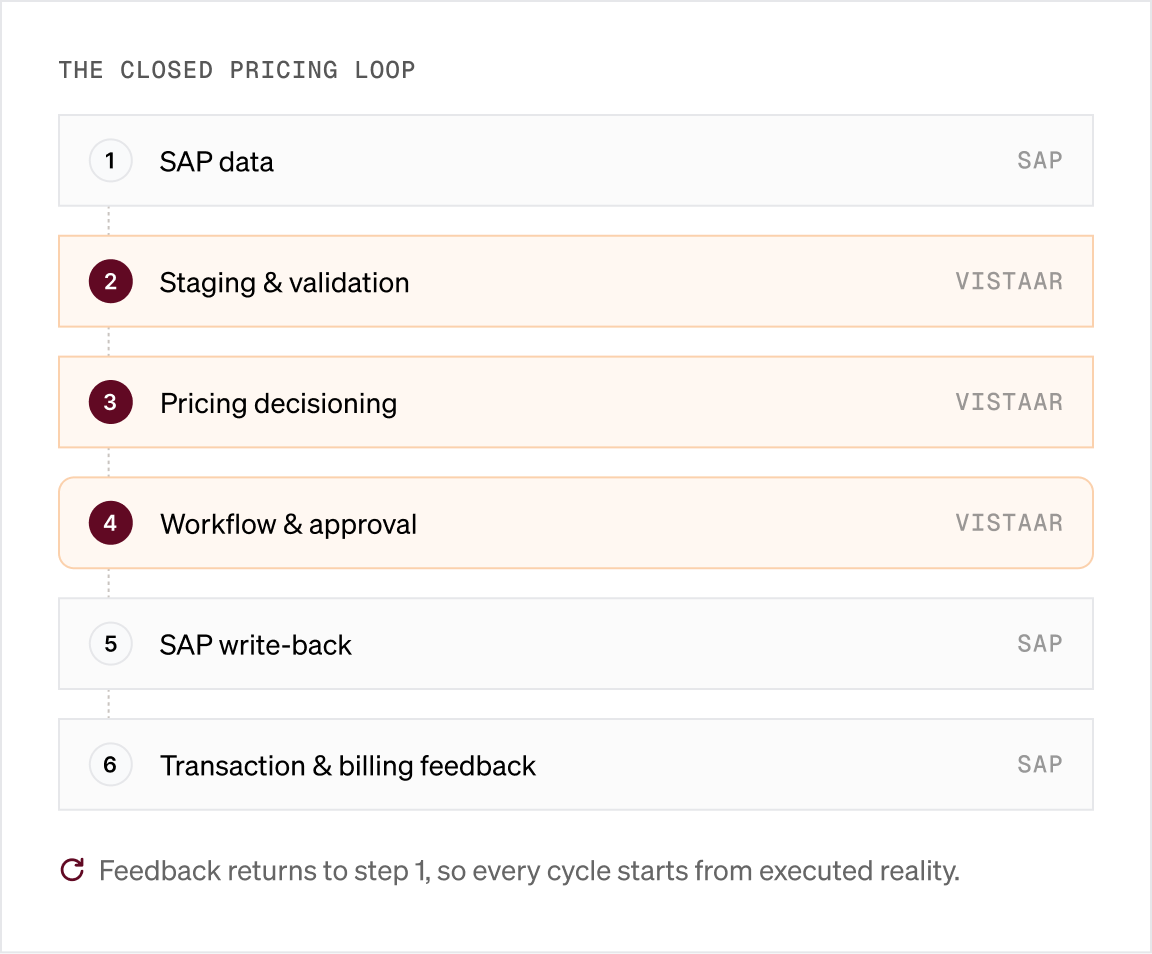
SAP acts as both a source of commercial data and an execution environment. Vistaar consumes the customer, product, pricing, transaction, cost, billing, and financial information pricing decisions require. Inside Vistaar that data is validated, analyzed, modeled, and routed through approval workflows. Approved outcomes then return to SAP through controlled write-back flows.
How Vistaar integrates with SAP S/4HANA
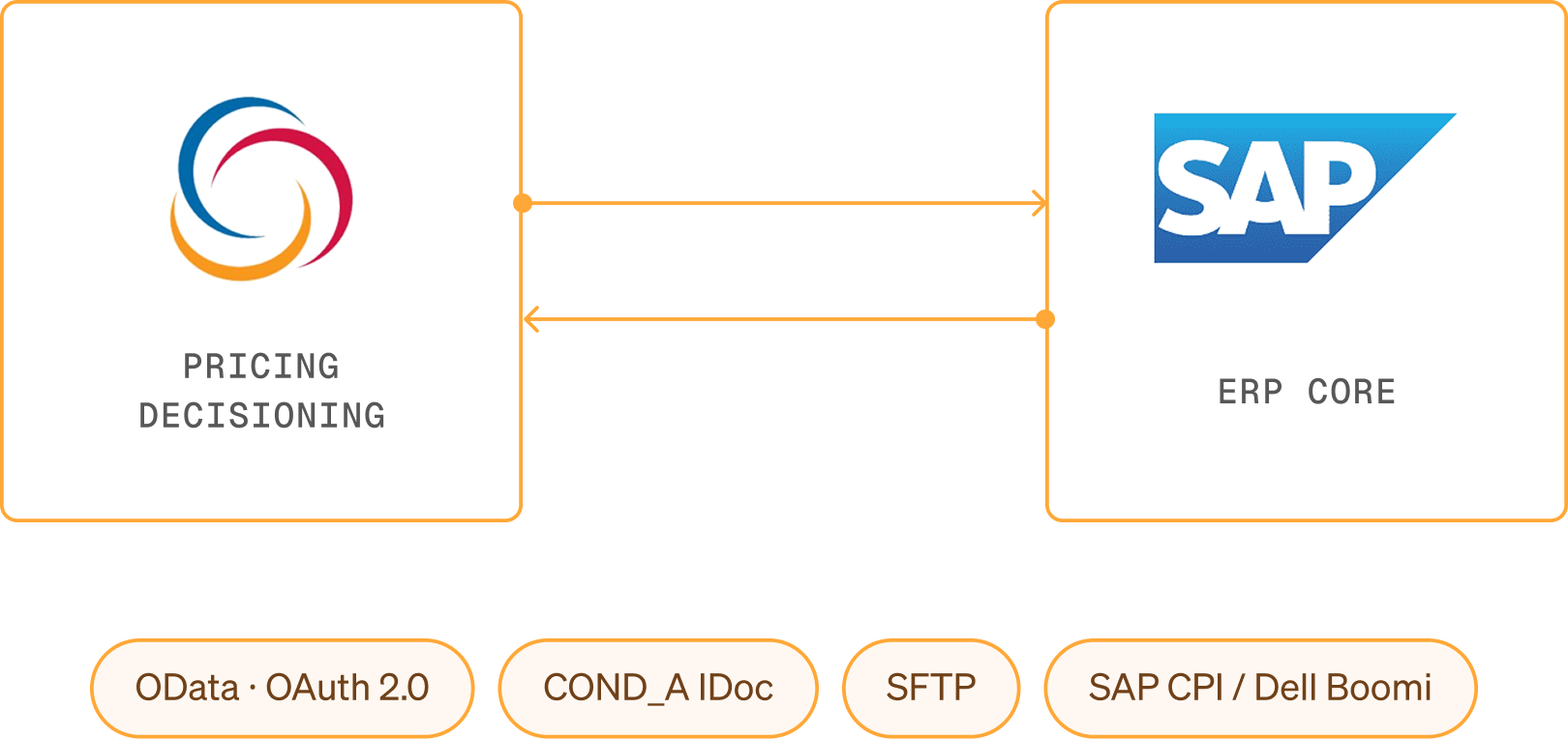
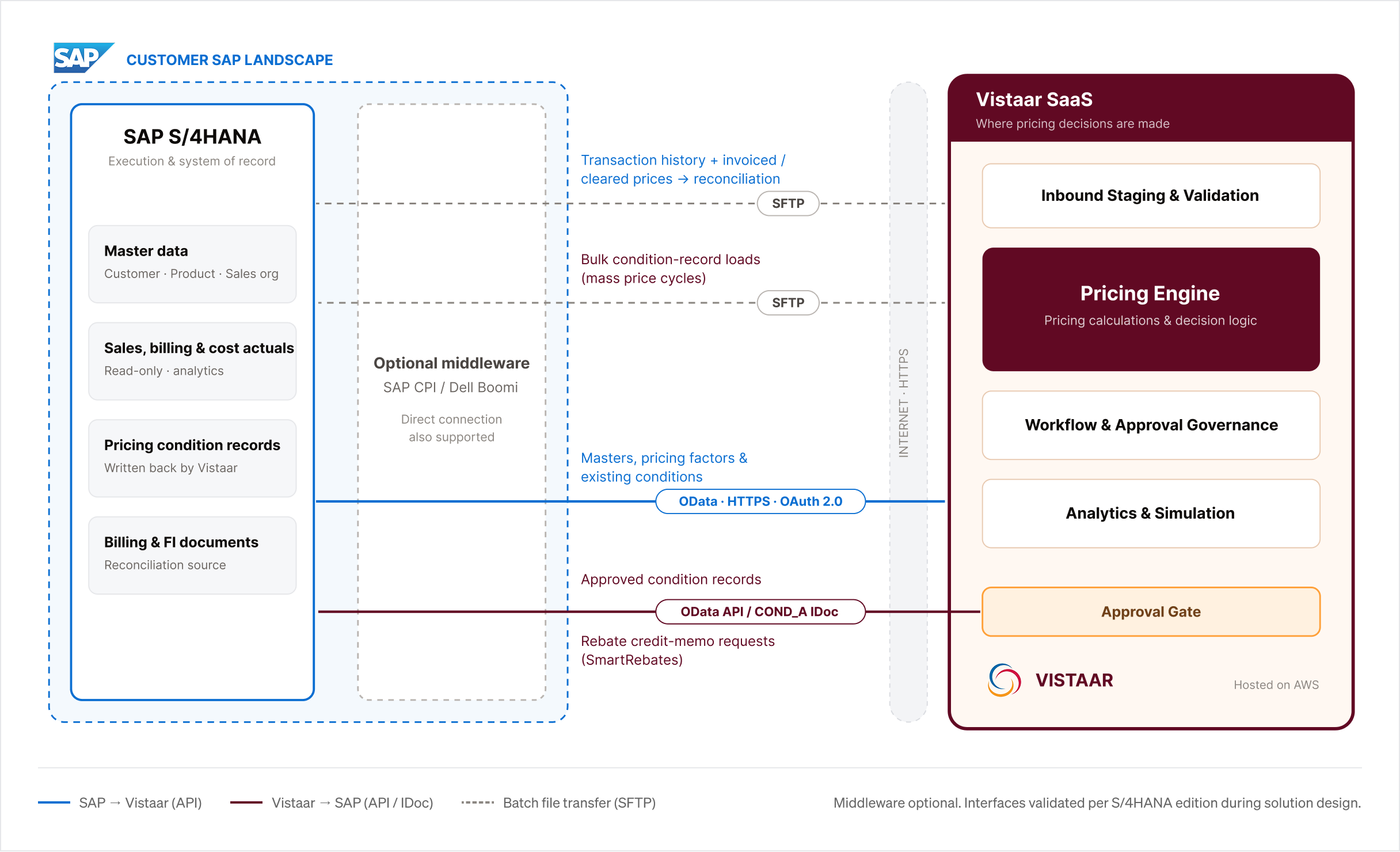
The Vistaar architecture supports multiple integration patterns rather than forcing every SAP workload through the same connector. Operational data moves through API-based interfaces, large-volume historical and pricing-cycle workloads use batch transfers, and you can connect directly or keep existing middleware such as SAP CPI or Dell Boomi.
Bring SAP Pricing and Commercial Data Into Vistaar
The integration starts with the SAP data required to understand the current pricing environment.
OData connections shown in the integration architecture use HTTPS with OAuth 2.0 authentication.
Stage and validate incoming SAP data
SAP data does not move directly into a pricing calculation.
Incoming information first enters Vistaar Inbound Staging & Validation, where it can be checked before being made available to pricing workflows.
This creates a controlled boundary between the source ERP data and the pricing processes operating on it.
Run pricing decisioning outside the SAP core
Validated SAP data can then be used across the Vistaar environment. The architecture includes:
Pricing Engine for pricing calculations and decision logic.
Workflow & Approval Governance for business rules and approvals.
Approval Gate before approved changes can leave Vistaar.
Analytics & Simulation for evaluating pricing scenarios and outcomes.
Vistaar's broader platform supports pricing management, optimization, quoting, rebates, promotions, analytics, and AI-assisted workflows. This is why the SAP integration should be viewed as a platform connection rather than an integration built around only three Vistaar products.
Return Approved Pricing Outcomes to SAP
Proposed pricing changes can remain inside Vistaar while they are analyzed, simulated, reviewed, and approved. Once they pass the approval gate, the relevant output can return to SAP.
SAP supports APIs for creating and updating pricing condition records, and COND_A is an established SAP IDoc mechanism for condition data. The important governance point is that pricing analysis is separated from pricing execution. Proposed changes do not have to become SAP condition records simply because a model generated them.
Match the integration method to the workload
Not every SAP pricing flow has the same volume or urgency,. Vistaar's architecture therefore combines API-based and batch patterns.
OData over HTTPS can handle structured exchange of masters, pricing factors, existing conditions, and approved pricing updates.
SFTP can support high-volume feeds such as historical transactions, invoiced prices, and bulk condition-record loads.
COND_A IDoc provides another write-back path for approved SAP condition records.
This allows the integration method to reflect the job being performed instead of forcing analytical history, operational updates, and mass repricing through one interface.
Connect directly or through your existing middleware
Vistaar does not require enterprises to introduce a new middleware layer solely for pricing. The architecture supports a direct SAP-to-Vistaar connection.
Where IT already standardizes enterprise integrations through middleware, the connection can also run through SAP CPI or Dell Boomi. That gives SAP teams the option to retain their established integration governance and monitoring model.
Keep pricing decisioning outside the SAP core
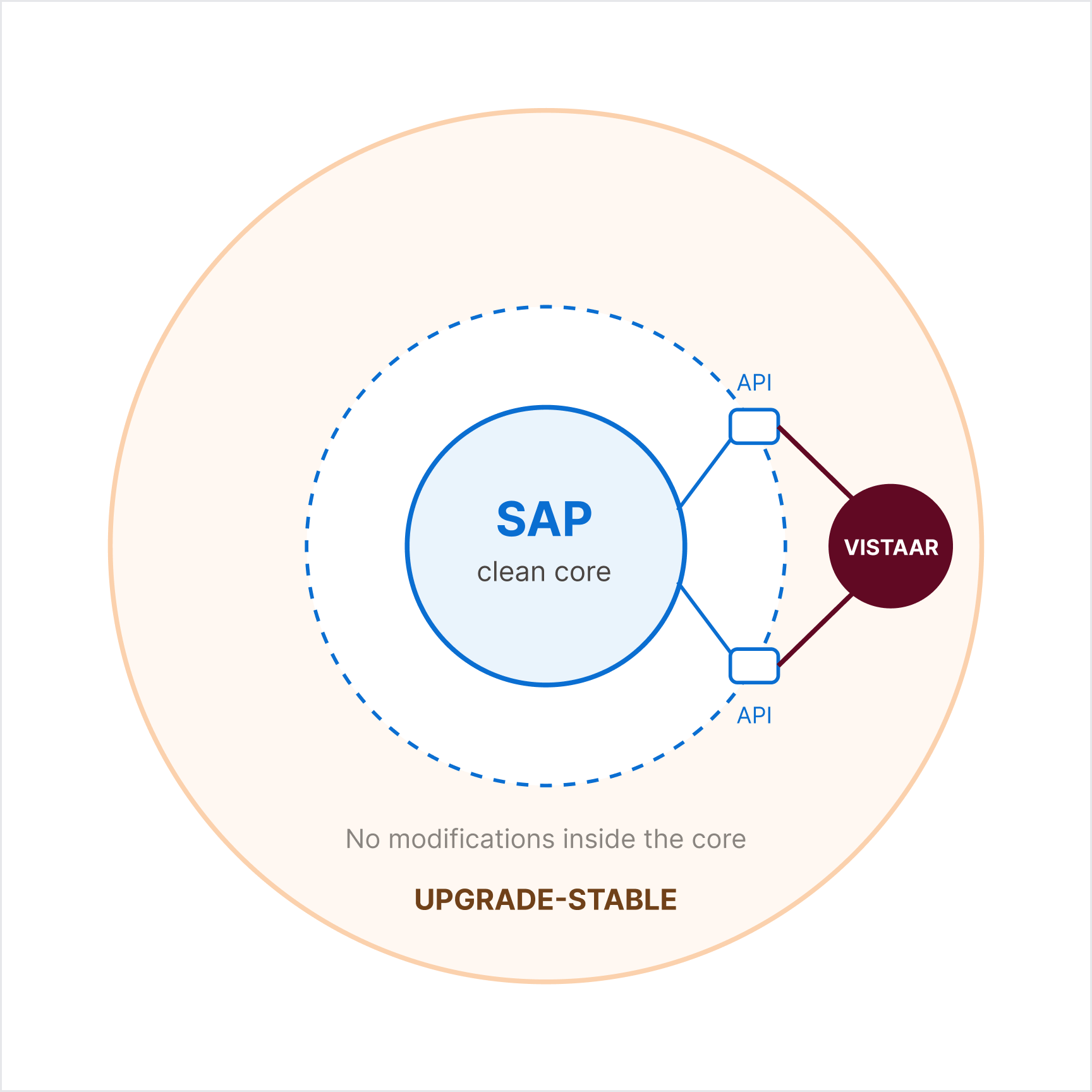
Vistaar operates as a separate SaaS pricing layer rather than embedding the pricing decisioning environment inside SAP.
Use SAP data across your Pricing Workflows
Once relevant SAP data is available in Vistaar, it can support the pricing workflows the enterprise chooses to deploy rather than being limited to one isolated pricing use case.
That can include
- Managing and governing enterprise prices
- Modeling optimized price recommendations
- Supporting deal and quote guidance
- Managing rebate programs
- Planning and evaluating promotions
- Simulating pricing scenarios
- Analyzing pricing and margin performance
- Automating pricing reviews and approvals
Vistaar publicly positions its platform as one environment spanning pricing, optimization, CPQ, rebates, promotions, and related workflows.
Trusted by pricing teams Running SAP

Steel · SAP ERP + Salesforce
North American long steel producer
Integrated Vistaar pricing solutions with SAP ERP. A more recent case study describes real-time integration with SAP and Salesforce as part of its value-based pricing transformation, which helped the company improve profitability and market share.
Read the Case Study
Electrification · SAP Order Processing
Global electrification products leader, ~$13B revenue
A global electrification products leader with approximately $13 billion in annual revenue integrated Vistaar with SAP Order Processing as well as its homegrown CRM and order-to-cash systems.
Read the Case Study
$1T+
Combined customer revenue
3–5%
Margin improvement
~40%
Reduction in manual labor
~$13B
Annual revenue of an electrification leader running Vistaar with SAP order processing
Real-time
SAP + Salesforce integration for a North American long steel producer
Frequently Asked Questions
Vistaar supports bidirectional data exchange with SAP using integration patterns including OData over HTTPS, SFTP, and SAP condition-record interfaces. The connection can run directly or through middleware such as SAP CPI or Dell Boomi.
The architecture supports SAP customer, product, and sales-organization masters, pricing factors, existing conditions, sales and cost actuals, transaction history, invoiced or cleared prices, and billing or financial data used for reconciliation.
Approved pricing condition records can return to SAP through OData-based APIs or a COND_A IDoc. High-volume condition-record loads can also use SFTP.
No. SAP can continue using its condition technique and condition records for transactional pricing execution. Vistaar operates around that environment to support pricing decisioning, optimization, simulation, workflow, and governance. SAP itself defines condition records as the master data used to store pricing information.
Not necessarily. The architecture supports a direct connection between SAP and Vistaar. SAP CPI or Dell Boomi can be retained when the enterprise already uses middleware to govern integrations.
Yes. The supplied integration architecture uses OData for structured operational exchange and SFTP for workloads such as transactional history and bulk condition-record loads.
SmartRebates can use ERP transaction data and connect rebate workflows with downstream financial processes. In the SAP architecture, rebate credit-memo requests are shown as an outbound flow from Vistaar back to SAP. Vistaar also documents open-API connectivity between SmartRebates and ERP and financial systems.