




Key Takeaways
• Distributors run on thin margins, often around 4%, so a small pricing error compounds fast across thousands of transactions.
• A distributor manages two sides of the margin: rebates and claimbacks coming in from suppliers, and pricing and discounts going out to customers.
• The features that matter most are deal management, rebate management, accrual review, and claimback management, working from one view.
• Uncontrolled discounting is a leading margin leak, which makes parametric quote approval a core requirement, not a nice-to-have.
• The real test of any tool is whether it shows true net profitability after every incentive on both sides, not just invoice margin.
A distributor sells a product at a 22% markup and books it as a healthy deal. Underneath, the customer already had a 6% loyalty discount, the supplier rebate on that SKU quietly dropped last quarter, and freight was never fully passed through. The real margin is closer to 9%. On a business that runs at 4% overall, that kind of gap is the difference between a good year and a bad one. The invoice looked fine. The economics did not.
Picking pricing software for wholesale distributors is really about closing that gap between what a deal looks like and what it actually earns. A distributor's margin lives on both sides of the transaction, so the right features are the ones that manage both at once. This is what to look for, and why each one matters for how distributors actually make money.
Why Distributor Pricing Is a Different Problem
Distributor pricing is not manufacturer pricing with a different logo on it. A distributor buys from suppliers and sells to customers. Margin is made in the gap between two sets of negotiated terms, not set once at the point of production. That structure changes what the software has to do.
The margins make the stakes unforgiving. Distributor operating margins often sit around 4%, so a small pricing mistake does not stay small. It compounds across thousands of transactions until it moves the whole year. At those levels, a two percent price slip can erase a large share of profit on a deal.
The upside of getting it right is just as sharp. McKinsey finds that a 1% improvement in price can lift operating profit by around 8.7% when volume holds, and and on thin distributor margins the effect cuts both ways. The same one percent that lifts profit when captured erases it when given away, which is why distributors cannot afford the guesswork fatter-margin businesses absorb.
Scale makes it worse. A distributor manages thousands of SKUs across many customer segments, each with its own contract terms, discounts, and rebate arrangements. No spreadsheet keeps that straight. Many distributors bring order to this with matrix pricing, a grid that sets price by customer segment and order volume, but even a matrix needs software to stay current at that scale.The right software becomes a genuine requirement rather than a convenience, and a sound pricing strategy for a distributor starts with the tooling to execute it.
The Two Sides of a Distributor's Margin
The single most important thing to understand about distributor pricing is that the margin has two sides, and good software has to see both. Money comes in from suppliers and goes out to customers, and the net is what is left after both sets of incentives are accounted for.
Each side carries its own incentives that move the real margin, and good software has to account for both.
The Supplier Side: Incentives Coming In
On the supplier side sit the rebates, claimbacks, and billbacks a distributor earns for buying. These reduce the true cost of goods, and they often make up a large share of a distributor's profit. Track them poorly and product costs read too high, which throws off every price built on them.
The Customer Side: Incentives Going Out
On the customer side sit the prices, discounts, and rebates a distributor gives to win and keep business. These determine the revenue actually captured. Track them poorly and the revenue line looks healthier than what the business really keeps.
A tool that only handles one side gives a false reading. Track customer pricing but ignore supplier rebates and your product costs are wrong, so every margin built on them is wrong too. The point of pricing software for a distributor is to hold both sides in one view. The net margin then reflects every incentive, not just the ones on the invoice. That is the same transaction-level honesty that accurate rebate management depends on.
Why Cost-Plus Pricing Quietly Fails Distributors
Many distributors price the simple way: take the invoice cost from the supplier, add a fixed markup, and quote the result. It is clean and easy to explain, and it hides a trap that the two-sided margin creates.
The trap is that invoice cost is not true cost. When a buyer negotiates a supplier rebate, the invoice price often rises while the net cost falls, because the rebate is paid back later. A distributor pricing on invoice cost plus a markup then quotes off an inflated number, pushing selling prices above the market without meaning to. The rebate that was supposed to protect margin quietly makes the distributor uncompetitive.
The fix is to price off net cost, the cost after supplier rebates and claimbacks are counted, not the invoice figure. That requires software that knows the earned rebate on every product, which is exactly why rebate tracking and pricing cannot live in separate systems. When they connect, cost-plus can work on the real cost. When they do not, the markup sits on a number that is wrong from the start, and a disciplined pricing model is impossible to hold.
Deal Management and Margin Visibility
The first feature to look for is deal management that shows true margin as a quote is built. Distributors quote constantly, and every quote is a chance to protect or give away margin. The software has to make the margin visible at the moment the price is set, not after the deal closes.

Strong deal management gives a rep the numbers that keep a quote disciplined. Guidance on where to start, where to target, and where the floor sits keeps pricing consistent across a large team. One customer no longer gets 5% while a similar one gets 12% for no recorded reason. That inconsistency is a documented source of margin leakage in distribution, and it comes straight from reps working without a visible floor.
The visibility has to reach true margin, not invoice margin. A quote that looks profitable on invoice terms can be thin once supplier rebates and customer incentives are counted, so the deal screen has to reflect the real economics. That is where deal management connects to broader price optimization, since a rep protecting real margin needs to see the real number.
Parametric Quote Approval to Stop Discount Leakage
Because uncontrolled discounting is one of the biggest margin leaks in distribution, approval workflow is a core feature rather than an afterthought. The software should route a quote for sign-off based on the risk it carries. It should not send every quote through the same slow chain, or worse, let every rep discount freely.
The right model is parametric: the discount depth on a quote decides the approval it needs. A shallow discount clears with the rep, and deeper ones climb to a manager, a director, and finance as the margin at stake grows. This keeps routine deals fast while making sure the risky ones get seen. That matters intensely when a two percent slip can cost a large part of the profit on a thin-margin deal.
The benefit beyond control is speed. A rep who knows their approval band can quote inside it without waiting, which keeps deals moving in a market where a slow quote loses business. Good approval design gives autonomy inside clear limits, and that balance is central to how a distributor manages pricing and margin at scale.
Rebate and Claimback Management
For a distributor, rebate and claimback management is not a side module; it is where a large share of profit is won or lost. Supplier rebates can account for a significant portion of distributor profitability, so the ability to track, calculate, and claim them accurately is central to the software, not optional.
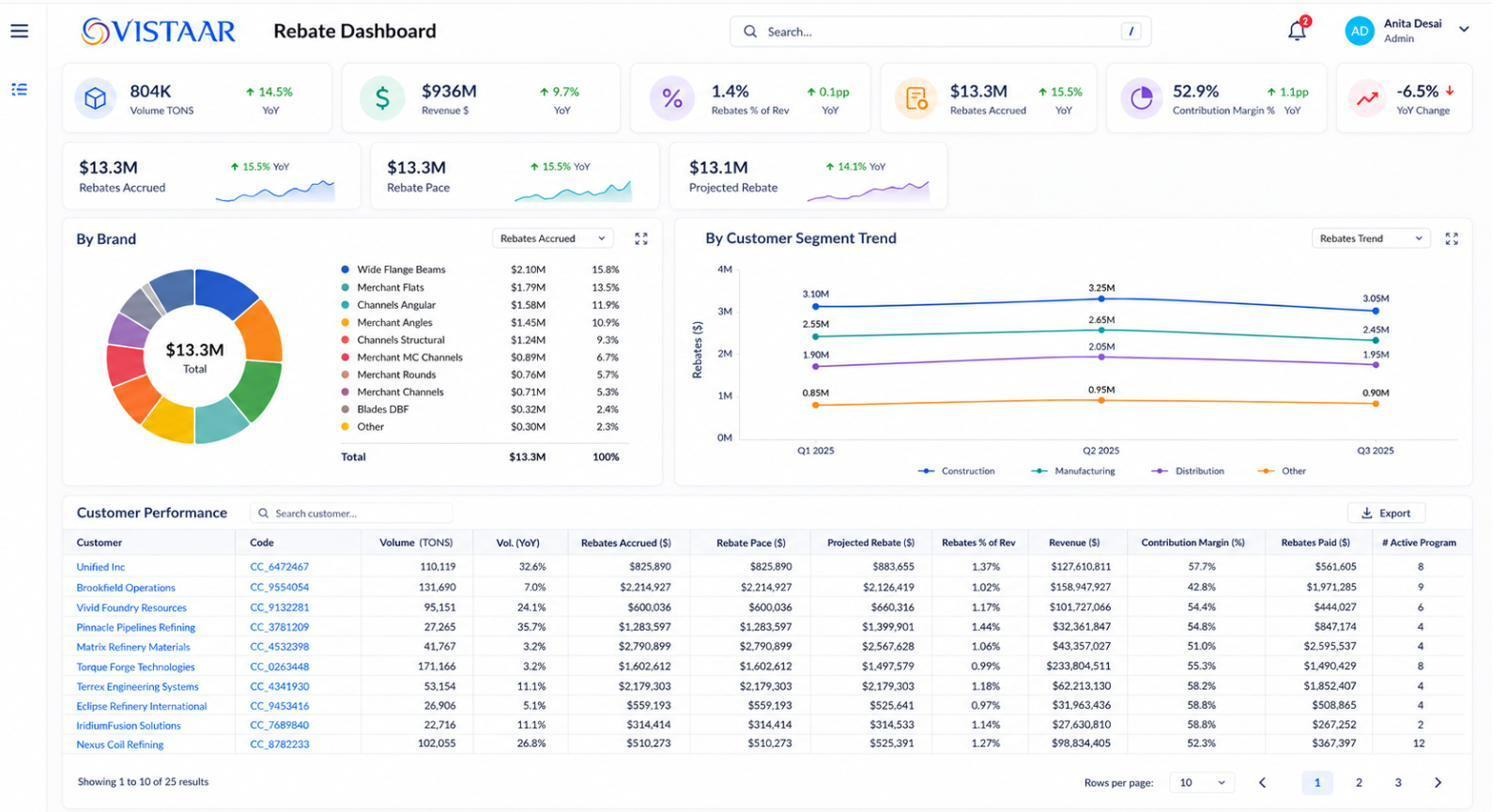
Automated Rebate Accrual
The hard part is not creating rebate programs but keeping their accruals correct as transactions arrive. Programs come in many shapes: tiered rebates, growth-based, billbacks, claimbacks. Each incoming transaction has to be matched to the right one, and growth programs need cumulative totals rather than single lines. Doing that by hand across dozens of supplier and customer programs does not scale, which is why automated accrual is a feature to insist on.
Claimback Tracking and Validation
Claimbacks deserve specific attention, because they are distinctive to distribution. When a distributor sells from stock into a price-sensitive deal at a lower agreed price, it claims the difference back from the supplier. That claimback has to be tracked and validated per transaction. Software that handles claimbacks cleanly protects margin a manual process routinely leaves on the table. It ties directly into how a distributor runs AI-driven pricing across a large book.
Accrual Review and True Profitability
Beyond calculating incentives, the software has to let a distributor review accruals and see true profitability at any level. Knowing a rebate exists is not enough. A distributor needs to see, on demand, how much has accrued, what is payable, and what the net margin looks like after everything.
Accrual review is what turns rebate data into a usable number. A distributor should be able to open any total and trace it to the transactions beneath. An accrual can then be verified rather than trusted, and a dispute becomes a lookup instead of an argument. That drill-down is also what keeps the numbers audit-ready, the same rigor sound pricing analysis brings to any figure finance has to defend.
True profitability is the payoff. Count supplier rebates, customer incentives, freight, and surcharges at the transaction level, and a distributor can finally see which customers and products actually make money. Not just which move the most volume. Some high-revenue customers turn out to be thin once every incentive is netted, and only a full pricing platform that sees both sides reveals it.
How the Features Fit Together
These features matter most when they work as one system rather than four separate tools. A distributor's margin is a single equation with inputs on both sides. Splitting deal management, rebates, claimbacks, and accrual review across disconnected tools recreates the blind spots the software was meant to remove.
The connection is what makes the net honest. Here is how the pieces line up against the job each one does:
Read together, the table makes the requirement clear. A distributor is not buying five features; it is buying one view of a margin that is made and lost on both sides at once. Any gap between the tools is a gap in the margin. The distributors that price well tend to run these functions from one place rather than stitching them together after the fact.
Conclusion
The right pricing software for a wholesale distributor comes down to a single test. Does it show the true net margin after every incentive on both sides, or only the invoice margin that hides the leaks? A distributor makes money in the gap between what it buys for and what it sells for. That gap is shaped as much by supplier rebates and claimbacks as by customer pricing and discounts. Software that sees only one side will always flatter the numbers.
See both sides of the margin in one system. Request a demo to see how deal management, rebates, claimbacks, and accrual review work together for distributors.
Frequently Asked Questions
What features matter most in pricing software for wholesale distributors?
Deal management with true margin visibility, parametric quote approval, rebate and claimback management on both supplier and customer sides, and accrual review for true profitability. Together they protect margin across the full transaction, not just the invoice.
Why do distributors need to manage both supplier and customer incentives?
A distributor's margin depends on rebates earned from suppliers and prices given to customers. Tracking only one side makes product costs or revenue wrong, so the net margin is inaccurate. Both sides must be netted to see true profitability.
What is a claimback in distribution?
A claimback is money a distributor recovers from a supplier after selling from stock into a price-sensitive deal at a lower agreed price. It has to be tracked and validated per transaction, which manual processes often miss, leaving margin unrecovered.
Why is discount control so important for distributors?
Distributors run on thin margins, so uncontrolled discounting is a leading source of leakage. Parametric approval routes deeper discounts for sign-off while letting routine quotes clear fast, protecting margin without slowing the business down.

As an experienced pricing solutions partner to some of the biggest names in global business, Vistaar offers a range of services to help our customers reach their maximum potential. Talk to us to see how we can help you create a more profitable future.